
Introduction
Handling financial records is a core responsibility for businesses, but it can become difficult as transactions increase and operations expand. Tasks such as invoicing clients, tracking expenses, monitoring cash flow, and preparing reports require accuracy and organization. When these activities are managed manually or through spreadsheets, errors and inefficiencies may occur.
To improve financial organization, many businesses use cloud accounting software. These platforms provide a centralized system for managing financial data, automating routine processes, and maintaining accurate records over time.
FreshBooks is one such platform developed to simplify accounting and invoicing for businesses and independent professionals.
What Is FreshBooks?
FreshBooks is a cloud-based accounting platform designed to help businesses manage invoicing, expenses, payments, and financial reporting within a single system.
FreshBooks belongs to the category of accounting and financial management software. FreshBooks is commonly used by freelancers, small businesses, agencies, and service-based professionals who require a structured way to manage finances without relying on complex accounting systems.
FreshBooks provides tools that combine financial tracking and billing processes in one environment.
Key Features Explained
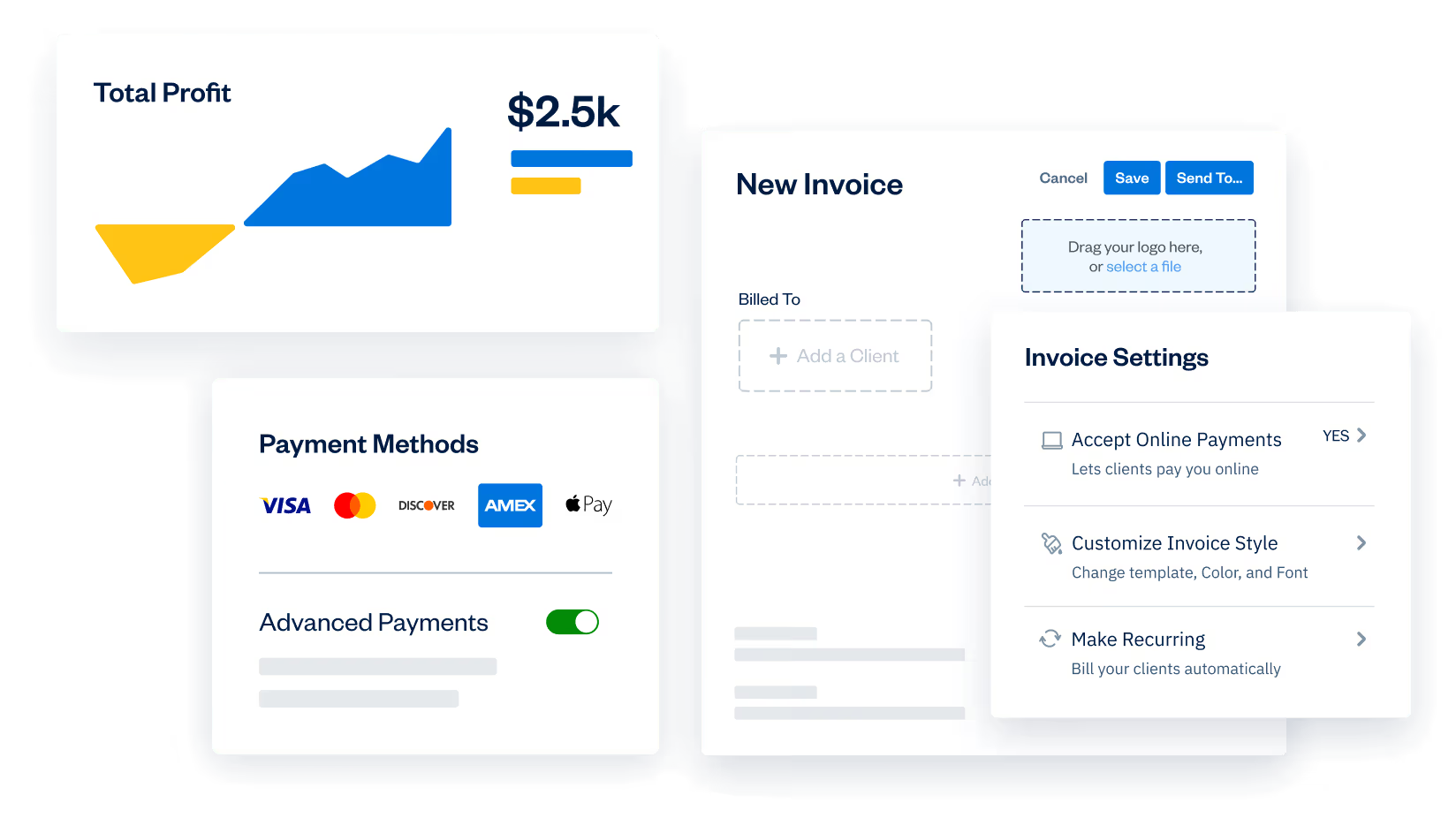
FreshBooks provides a digital invoicing system where users can create, customize, and send invoices to clients. FreshBooks allows businesses to manage billing in an organized way and supports recurring invoices and automated reminders to maintain consistency in payments.
FreshBooks includes expense tracking functionality that allows users to record and categorize spending. FreshBooks helps maintain accurate financial records by organizing expenses in a structured format and providing visibility into business costs.
FreshBooks offers time tracking capabilities that enable users to log working hours for projects or clients. FreshBooks allows tracked time to be converted into invoices, which is useful for professionals who charge based on hours worked.
FreshBooks provides financial reporting tools that generate summaries such as profit and loss statements, expense reports, and tax-related data. FreshBooks helps users understand their financial position and prepare documentation for accounting purposes.
FreshBooks supports online payment processing, allowing clients to pay invoices through integrated methods. FreshBooks simplifies the payment process and helps reduce delays in receiving payments.
FreshBooks also allows collaboration by enabling accountants or team members to access financial data with controlled permissions. FreshBooks supports secure data sharing while maintaining accuracy in financial management.
Common Use Cases
FreshBooks is commonly used by freelancers to manage invoices, track expenses, and organize payments in a structured system. FreshBooks helps simplify financial tasks for individuals working independently.
Small businesses use FreshBooks to maintain financial records, monitor income and expenses, and generate reports for operational insights.
Agencies use FreshBooks to manage multiple clients, track billable hours, and streamline billing workflows.
FreshBooks is also used during tax preparation, as organized financial data helps simplify reporting and compliance processes.
Potential Advantages
FreshBooks provides a centralized system for managing financial activities, which can reduce reliance on manual methods. FreshBooks combines invoicing, expense tracking, and reporting into one platform, helping users organize workflows.
FreshBooks is designed to be accessible, making it easier for users without accounting expertise to manage finances. FreshBooks also offers cloud access, allowing financial data to be managed from different locations.
These advantages depend on how FreshBooks is used and the needs of the business.
Limitations & Considerations
FreshBooks may not include advanced accounting features required by larger businesses, such as complex financial controls or inventory management.
FreshBooks depends on internet connectivity, which may limit access in offline situations.
Users may need time to understand financial terminology and reporting features within FreshBooks.
FreshBooks may not fully replace comprehensive accounting systems for organizations with complex financial requirements.
Businesses may need to evaluate whether FreshBooks fits their scale and operational needs.
Who Should Consider FreshBooks
FreshBooks may be suitable for freelancers, small businesses, and service-based professionals who need a structured and simplified way to manage invoicing, expenses, and financial records.
Who May Want to Avoid FreshBooks
FreshBooks may not be ideal for large enterprises or businesses that require advanced accounting systems. FreshBooks may also not suit users who need highly customized financial workflows or offline access.
Comparison With Similar Tools
Platforms like QuickBooks provide more advanced accounting features, while Xero offers cloud-based accounting with strong integrations. Zoho Books provides similar capabilities within a broader software ecosystem.
Compared to these tools, FreshBooks is generally positioned as a simplified accounting platform focused on invoicing and ease of use.
Final Educational Summary
FreshBooks is a cloud-based accounting platform that helps businesses manage invoicing, expenses, and financial reporting within a centralized system. FreshBooks supports organized financial workflows and simplifies everyday accounting tasks.
While FreshBooks can improve financial management for smaller businesses, it may not meet the needs of organizations with complex accounting requirements. Users should evaluate whether FreshBooks aligns with their financial processes.
This article is for informational purposes only. Readers should evaluate tools based on their own requirements.
