
Introduction
Kit is a digital platform designed to support creators, publishers, and online businesses in managing audience communication through email-based workflows. It positions itself as a creator-focused alternative to traditional email marketing systems, emphasizing simplicity, audience segmentation, and content-driven engagement rather than sales-heavy automation.
Unlike many legacy email tools that prioritize enterprise-scale marketing campaigns, Kit focuses on individual creators, educators, writers, and small teams who rely on direct audience relationships. This article provides a comprehensive and neutral examination of Kit’s structure, functionality, intended use cases, strengths, and practical limitations. The goal is to inform readers who are researching email communication tools rather than persuade them toward adoption.
What Kit Is and Who It Is Designed For
Kit is an email communication and audience management platform built primarily for creators who distribute newsletters, educational content, digital products, or memberships. Its design philosophy centers on maintaining long-term subscriber relationships rather than executing aggressive promotional campaigns.
The platform is commonly used by:
- Independent writers and bloggers
- Newsletter publishers
- Course creators and educators
- Podcasters and media creators
- Small online businesses with content-first strategies
Rather than positioning itself as a full marketing automation suite, Kit emphasizes clarity, ease of use, and minimal configuration. This makes it accessible to users who may not have a background in marketing technology or campaign optimization.
Core Platform Architecture
Kit’s architecture is built around three primary components: subscribers, broadcasts, and automations. Each element is designed to reduce complexity while still allowing for targeted communication.
Subscriber-Centric Model
Kit uses a subscriber-first data structure rather than traditional list-based segmentation. Each subscriber exists once in the system and can be assigned multiple tags based on behavior, interests, or subscription source.
This approach reduces duplicate contacts and simplifies segmentation. It also allows creators to view a subscriber’s complete interaction history in a single profile, including signup sources, tags, and previous email engagement.
Broadcast Emails
Broadcasts are one-time email messages sent to selected segments of subscribers. These are typically used for newsletters, announcements, or time-sensitive updates.
Broadcast creation focuses on text-based content, with minimal emphasis on complex design layouts. This aligns with creators who prefer a more personal, letter-style communication format.
Automations and Sequences
Automations in Kit are rule-based workflows that trigger emails or actions based on subscriber behavior. These can include:
- Welcome email sequences
- Course delivery schedules
- Follow-up messages based on engagement
- Tag-based conditional paths
While the automation system is visually structured and easier to configure than enterprise tools, it is intentionally limited in scope to avoid over-complexity.
Content Creation and Editing Experience
Kit’s email editor prioritizes writing over design. The interface is minimal, with formatting options that support headings, links, and basic styling without overwhelming the user.
This design choice reflects the platform’s assumption that subscribers engage primarily with content quality rather than visual complexity. For creators who publish essays, lessons, or commentary, this editor supports faster publishing with fewer distractions.
Advanced visual layout control is limited, which may be a constraint for brands that require highly stylized marketing emails.
Audience Segmentation and Tagging
Segmentation in Kit relies heavily on tags and subscriber actions. Tags can be applied manually, through forms, or via automation rules. These tags allow creators to send targeted content to specific groups without maintaining multiple lists.
Segments can be built using conditions such as:
- Subscription source
- Tag presence or absence
- Email engagement behavior
- Purchase-related triggers
This system supports precise targeting while remaining relatively easy to manage for smaller teams.
Forms and Landing Pages
Kit includes built-in tools for creating email signup forms and basic landing pages. These are primarily functional rather than design-focused.
Forms can be embedded on websites or used as standalone signup points. Landing pages typically include:
- Headline and description
- Email input field
- Optional incentive description
Customization options are limited compared to dedicated landing page builders, but sufficient for straightforward audience growth use cases.
Monetization and Creator-Focused kit
Kit includes features intended to support creator monetization workflows. These may include:
- Paid newsletter support
- Digital product delivery via email
- Integration with payment processors
- Subscriber tagging based on purchases
The platform’s monetization features are designed to integrate naturally with email communication rather than operate as a separate sales system.
However, complex e-commerce operations, inventory management, or advanced checkout customization are outside Kit’s scope.
Analytics and Reporting
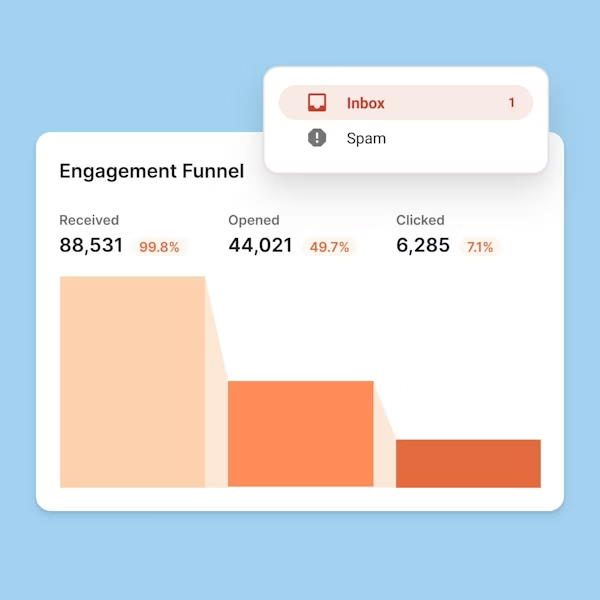
Kit provides basic analytics focused on email performance. Common metrics include:
- Open rates
- Click rates
- Subscriber growth
- Unsubscribe activity
Reports are presented in a simplified format, prioritizing readability over granular data exploration. While this supports quick insight for creators, it may not satisfy users who require advanced attribution modeling or multi-channel analytics.
Strengths of the Platform
Several aspects of Kit make it appealing for its target audience:
- Creator-Centric Design
The platform avoids enterprise-level complexity and focuses on workflows relevant to individual creators. - Simplified Subscriber Management
The tag-based model reduces redundancy and supports clearer audience understanding. - Writing-Focused Interface
The editor encourages content quality rather than visual design dependency. - Accessible Automation Tools
Automations are easier to configure compared to many traditional marketing systems.
Practical Limitations and Considerations
Despite its strengths, Kit has limitations that should be evaluated carefully:
- Limited Design Customization
Users requiring visually rich email layouts may find the editor restrictive. - Basic Analytics
Reporting capabilities are sufficient for high-level insights but lack depth for advanced analysis. - Not Built for Large Enterprises
Complex marketing operations, large teams, or multi-brand organizations may outgrow the platform. - Automation Depth
While easy to use, automation logic is intentionally constrained and may not support advanced behavioral modeling.
Typical Use Scenarios
Kit is most effective in scenarios such as:
- Weekly or daily newsletter publishing
- Educational email courses
- Content-driven audience engagement
- Personal brand communication
- Subscription-based content delivery
It is less suitable for:
- High-volume retail email campaigns
- Complex CRM-driven sales funnels
- Large-scale corporate marketing teams
Data Handling and Compliance Considerations
Kit includes standard compliance features such as unsubscribe management and consent-based subscriptions. Users remain responsible for ensuring compliance with regional data protection regulations based on their audience location.
As with any email platform, responsible list management and transparent communication practices are essential.
Overall Assessment
Kit functions as a focused email communication platform rather than a comprehensive marketing suite. Its strengths lie in simplicity, creator alignment, and clarity of purpose. By limiting unnecessary complexity, it allows creators to concentrate on producing consistent, meaningful content for their audiences.
However, those requiring advanced design control, extensive analytics, or enterprise-scale automation should evaluate whether Kit’s streamlined approach aligns with their long-term operational needs.
Disclosure
This article is intended for informational and educational purposes only. It does not constitute endorsement, promotion, or commercial recommendation of any platform or service.
