
Introduction
Organizations across industries increasingly rely on artificial intelligence systems to process data, automate tasks, and assist decision-making. Despite the rapid expansion of AI technologies, many businesses encounter practical barriers when attempting to integrate AI models into daily workflows. These challenges often involve fragmented data sources, incompatible software environments, governance concerns, and limited technical expertise within operational teams.
As a result, a category of software platforms has emerged to bridge the gap between advanced AI capabilities and enterprise infrastructure. These systems aim to organize access to AI models, coordinate automation processes, and provide governance frameworks that help organizations deploy artificial intelligence more safely and efficiently.
Platforms within this category are commonly referred to as enterprise AI orchestration platforms, AI integration layers, or AI enablement frameworks. They function as intermediaries between AI models, corporate data systems, and business applications. One example within this evolving ecosystem is Airia, a platform designed to help organizations manage and operationalize AI tools within existing technology environments.
This article examines Airia from an educational and analytical perspective, focusing on its structure, functionality, potential benefits, and limitations within the broader landscape of enterprise AI software.
What Is Airia?
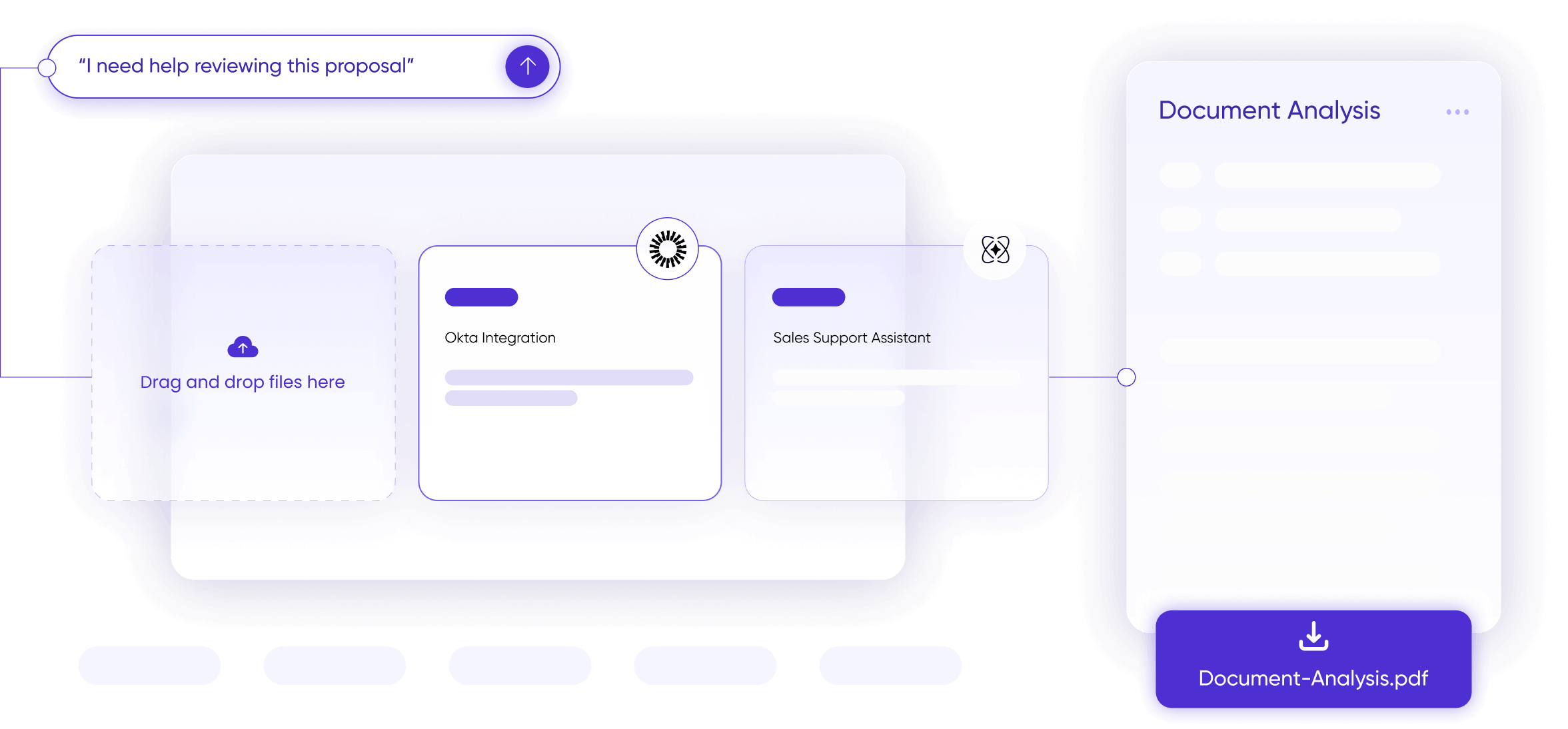
Airia is an enterprise-focused artificial intelligence platform that aims to simplify the integration, management, and deployment of AI tools across organizational systems. Rather than functioning as a single AI model or chatbot, Airia operates as a centralized AI orchestration layer that connects multiple AI models, data sources, and business applications.
The platform is designed primarily for corporate environments where different departments rely on separate software systems such as customer relationship management (CRM), document management tools, databases, analytics platforms, and internal knowledge bases. In such environments, implementing AI solutions individually for each system can lead to fragmentation, security concerns, and inconsistent workflows.
Airia addresses these issues by providing a unified framework through which organizations can access and manage multiple AI services while maintaining governance and oversight. The platform supports integration with various machine learning models, including large language models (LLMs), and allows businesses to embed AI-powered functionality into internal processes.
From a classification standpoint, Airia can be considered part of several overlapping technology categories:
- Enterprise AI orchestration platforms
- AI workflow automation systems
- AI integration middleware
- Organizational knowledge AI platforms
These categories reflect the platform’s role in coordinating AI capabilities rather than replacing individual AI models.
Key Features Explained
Centralized AI Model Integration
One of the defining aspects of Airia is its ability to connect with multiple artificial intelligence models and services within a single environment. Enterprises often experiment with different models for tasks such as text generation, data analysis, summarization, or classification. Without coordination, managing these models can become technically complex.
Airia allows organizations to access and control these models through a unified interface. This structure enables teams to switch between models, evaluate outputs, and manage permissions while maintaining oversight over how AI systems are used internally.
Data Source Connectivity
Enterprise AI systems often require access to internal datasets, documents, and operational records. Airia includes integration capabilities that allow the platform to connect with organizational data repositories. These may include:
- Knowledge bases
- Document storage systems
- Internal databases
- CRM platforms
- Business intelligence tools
By linking AI models to internal data sources, the platform enables context-aware responses and analysis rather than relying solely on external training data.
Workflow Automation
Another key component of Airia is workflow orchestration. In many organizations, repetitive processes involve collecting information, analyzing documents, summarizing insights, and distributing results to team members.
Airia supports automation workflows that combine AI capabilities with operational processes. For example, a workflow might involve retrieving data from a database, analyzing it using a language model, generating a summary report, and forwarding the results to a project management system.
This automation reduces manual coordination between systems and standardizes how AI is incorporated into tasks.
Governance and Security Controls
AI adoption within enterprises often raises concerns related to security, data privacy, and compliance. Airia includes governance features designed to help organizations maintain control over how AI is used.
These governance capabilities may include:
- Role-based access permissions
- Usage monitoring and audit logs
- Data protection controls
- AI model usage policies
Such mechanisms are intended to help organizations track AI activity and enforce internal compliance requirements.
Custom AI Assistants
Airia also supports the creation of domain-specific AI assistants that operate using organizational data. These assistants can be configured to respond to internal queries, summarize documents, or assist with operational tasks.
Unlike general-purpose chatbots, these assistants may be trained or configured using internal knowledge sources, enabling them to provide responses relevant to company-specific information.
Common Use Cases
Internal Knowledge Management
Many organizations accumulate large volumes of documentation, policies, and internal knowledge over time. Locating relevant information can become difficult, particularly for large teams.
Airia can assist in building AI-powered knowledge systems that allow employees to ask questions and retrieve summarized information from internal documentation.
Customer Support Assistance
Customer service departments frequently rely on knowledge bases, product documentation, and policy manuals. Airia can help integrate these resources into AI tools that assist support representatives with information retrieval and response drafting.
Rather than fully automating support interactions, the platform often functions as a support assistant for human agents.
Business Process Automation
Departments such as finance, legal, and operations often perform repetitive data analysis and document review tasks. Airia workflows can automate portions of these processes, such as summarizing reports, extracting structured information from documents, or generating internal summaries.
Research and Data Analysis
Organizations that rely on research reports or large datasets may use AI platforms like Airia to process and analyze information more efficiently. AI models integrated within the platform can assist with summarization, pattern detection, and comparative analysis.
Software and IT Operations
Technical teams may integrate Airia with development and IT management systems to assist with tasks such as documentation analysis, code explanation, or troubleshooting assistance.
Potential Advantages
Unified AI Infrastructure
One advantage of platforms like Airia is the consolidation of multiple AI tools within a single operational framework. This reduces the need for departments to independently adopt and manage separate AI systems.
Improved Data Context
By connecting AI models to internal datasets, Airia allows organizations to generate responses that reflect company-specific information. This can improve the relevance of outputs in comparison to general-purpose AI tools that lack internal data access.
Operational Efficiency
Automation features can reduce the manual effort required to coordinate tasks across software systems. By embedding AI into workflows, organizations may streamline certain operational processes.
Governance and Oversight
Enterprises often require strict monitoring and control over new technologies. Airia’s governance mechanisms allow organizations to track AI usage and enforce policies that align with internal compliance requirements.
Scalability Across Departments
Because the platform operates as an integration layer, it can potentially support AI use cases across multiple departments within the same organization. This scalability may simplify enterprise-wide AI adoption strategies.
Limitations & Considerations
Implementation Complexity
Although AI orchestration platforms aim to simplify integration, the initial implementation process can still require technical expertise. Connecting multiple data sources, configuring workflows, and establishing governance policies may involve coordination between IT teams and business units.
Data Security Concerns
Any platform that connects AI models with internal organizational data raises security considerations. Organizations must ensure that sensitive information is handled according to regulatory requirements and internal policies.
Model Dependence
Airia functions as an orchestration platform rather than a standalone AI model. The quality of outputs therefore depends on the underlying AI models integrated into the system. If those models have limitations, the platform itself cannot fully eliminate them.
Cost Considerations
Enterprise AI platforms typically involve operational costs associated with infrastructure, licensing, and AI model usage. Organizations must evaluate whether the expected productivity improvements justify these expenses.
Organizational Change Management
Adopting AI platforms often requires changes to workflows and employee training. Without clear internal guidelines, teams may struggle to integrate AI tools effectively into daily operations.
Who Should Consider Airia
Airia may be relevant for organizations that meet several conditions:
Large enterprises with complex software ecosystems
Companies operating multiple internal systems may benefit from a centralized AI integration layer.
Organizations exploring enterprise AI strategies
Businesses evaluating how to incorporate artificial intelligence into operations may consider orchestration platforms to manage experimentation and deployment.
Teams requiring internal knowledge AI systems
Departments that rely heavily on documentation and internal data may find value in AI assistants that reference internal knowledge bases.
Companies prioritizing governance and oversight
Organizations with regulatory or compliance requirements may prefer AI platforms that include monitoring and access controls.
Who May Want to Avoid It
Airia may be less suitable for certain situations.
Small teams with limited AI needs
Organizations that only require simple AI tools, such as standalone chatbots or text generators, may not require a full orchestration platform.
Businesses without centralized data infrastructure
Companies that lack structured internal data systems may find limited value in AI platforms designed for enterprise data integration.
Organizations seeking a standalone AI model
Airia is designed as an integration platform rather than a single AI model. Teams primarily interested in direct AI generation tools may prefer simpler alternatives.
Teams without technical support resources
Because enterprise AI implementation often involves configuration and integration work, organizations without technical staff may encounter challenges during deployment.
Comparison With Similar Tools
Airia operates within a growing ecosystem of enterprise AI management platforms. While specific capabilities vary across vendors, similar categories of tools often share certain characteristics.
AI Orchestration Platforms
Platforms in this category focus on coordinating access to multiple AI models and embedding them within business processes. They often emphasize workflow automation and integration with enterprise data systems.
AI Knowledge Platforms
Some systems specialize in building AI-powered knowledge assistants that connect with organizational documentation. Airia overlaps with this category through its ability to create domain-specific AI assistants.
AI Middleware and Integration Tools
Middleware platforms serve as connectors between AI models and existing enterprise software infrastructure. These tools typically focus on API management, data routing, and workflow automation.
What distinguishes Airia is its emphasis on combining several of these roles into a single framework. The platform integrates AI model access, workflow automation, governance mechanisms, and knowledge management within one system.
However, the effectiveness of such a platform depends largely on how well it integrates with an organization’s existing technology stack.
Final Educational Summary
The rapid growth of artificial intelligence technologies has created both opportunities and challenges for organizations seeking to incorporate AI into operational workflows. While powerful AI models exist, integrating them into complex enterprise environments often requires additional infrastructure.
Airia represents one approach to addressing this integration challenge. Rather than functioning as a single AI application, the platform operates as an orchestration layer that connects AI models, internal data sources, and enterprise software systems.
Key components of the platform include centralized AI management, workflow automation capabilities, governance controls, and the ability to build AI assistants trained on internal knowledge. These features reflect broader trends in enterprise AI software, where organizations increasingly require structured frameworks for managing AI adoption.
At the same time, the platform introduces considerations related to implementation complexity, security oversight, and operational costs. As with many enterprise technologies, the suitability of Airia depends largely on organizational scale, infrastructure readiness, and strategic priorities surrounding artificial intelligence.
Understanding the role of platforms like Airia contributes to a broader discussion about how businesses are adapting to AI-driven digital transformation.
Disclosure: This article is for educational and informational purposes only. Some links on this website may be affiliate links, but this does not influence our editorial content or evaluations.
