
Introduction
Finding reliable scientific information online can be challenging. Traditional search engines often return a mix of blog posts, opinion articles, and research papers, which makes it difficult for students, researchers, and professionals to quickly identify credible academic evidence.
Even when academic databases are used, reading dozens of research papers to understand the overall findings on a topic can be time-consuming. Conflicting results between studies may also create confusion about what the scientific literature actually suggests.
Tools designed specifically for academic research aim to reduce this complexity. One such tool is Consensus, which uses artificial intelligence to analyze scientific papers and present summarized insights grounded in peer-reviewed research.
What Is Consensus
Consensus is an AI-powered academic search platform designed to help users find answers directly from scientific literature. The system allows users to ask research questions in natural language and retrieves relevant findings from a large database of peer-reviewed papers.
The platform analyzes academic publications and generates summaries that are linked to the original studies. Instead of simply listing papers, the system attempts to highlight key conclusions and supporting evidence across multiple sources.
Consensus currently searches through a dataset containing over 200 million scientific documents, including journal articles, conference papers, and preprints from many academic fields.
The goal of the platform is to help users locate evidence-based answers while maintaining traceability to the original research papers.
Key Features Explained
AI-Powered Research Search
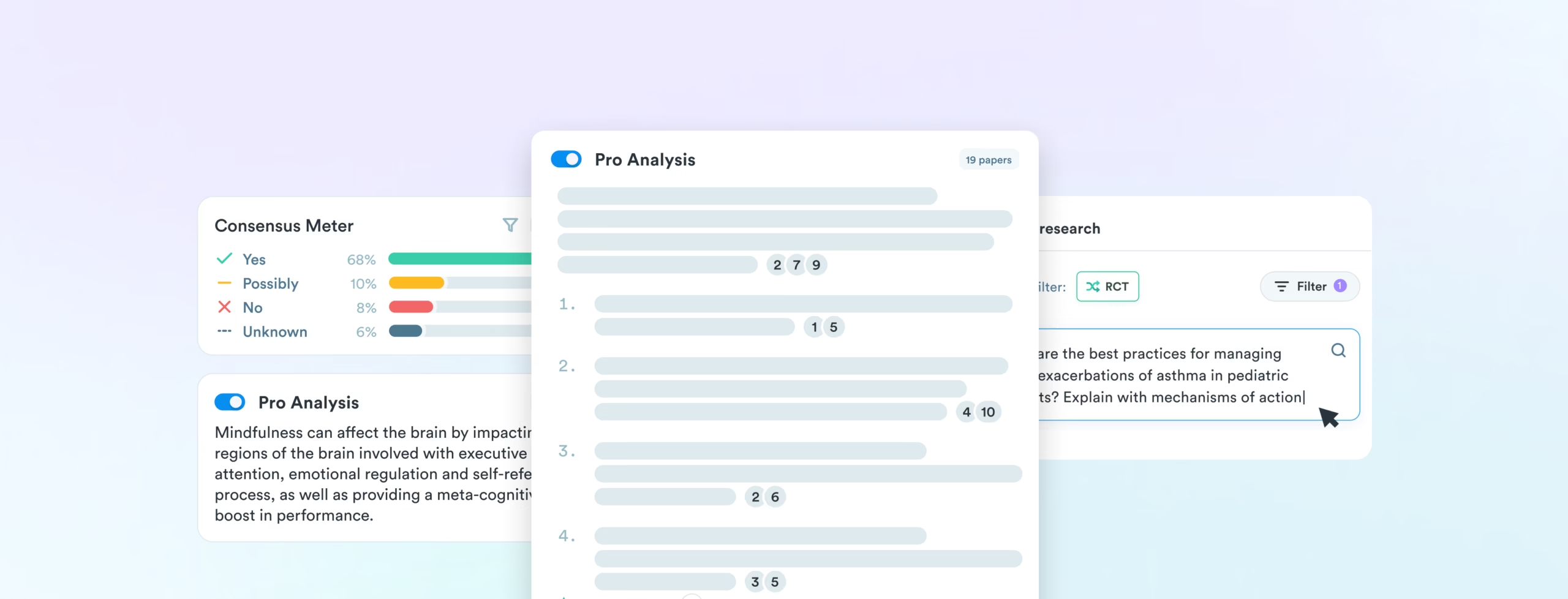
The platform allows users to type a research question in plain language. The system uses semantic search and keyword matching to locate relevant academic studies and extract key information from them. This helps users identify useful papers without needing precise database queries.
Evidence-Based Summaries
Consensus generates synthesized summaries from multiple research papers. These summaries aim to explain the general findings while citing the specific studies used to generate the response.
This approach attempts to maintain transparency so readers can verify the original sources.
Consensus Meter
One notable feature is the Consensus Meter, which analyzes research papers that answer yes-or-no questions and categorizes the results based on whether the evidence supports, rejects, or is uncertain about a claim.
The system reviews multiple papers and attempts to show where the majority of studies agree or disagree.
Study Snapshot
Each paper can display a “study snapshot,” which highlights important details such as:
- Study methodology
- Sample size
- Population studied
- Key outcomes
This helps users quickly evaluate the quality and relevance of research findings.
Advanced Filters
Users can refine research results using filters such as:
- Study type (RCT, meta-analysis, observational study)
- Population type (human, animal, etc.)
- Journal prestige or citation influence
These filters help narrow down results to higher-quality research or specific study conditions.
Ask Paper Feature
The platform also provides an AI interface that allows users to ask questions about individual research papers. This feature analyzes the full text or abstract and attempts to explain methodology, conclusions, or findings in simpler terms.
Common Use Cases
Consensus may be used in several research-related scenarios:
Academic literature reviews
Students and researchers may use the tool to locate relevant papers and identify overall research trends in a topic area.
Evidence-based decision research
Professionals in fields like healthcare, education, and policy sometimes require quick access to scientific evidence when evaluating claims.
Scientific topic exploration
Users exploring unfamiliar scientific topics may use the platform to see what published studies suggest.
Research organization
Saved lists and export features allow users to organize papers and transfer citations to reference managers such as Zotero or EndNote.
Potential Advantages
Faster discovery of academic sources
AI-assisted search can reduce the time needed to identify relevant research papers compared with manual searching.
Evidence-linked responses
The platform attempts to maintain connections between generated summaries and the underlying scientific studies.
Structured research insights
Features such as study snapshots and consensus analysis provide structured summaries of complex research findings.
Large academic dataset
The platform indexes hundreds of millions of scientific documents across multiple disciplines.
Limitations & Considerations
Dependence on available research
If limited studies exist on a topic, summaries may reflect incomplete evidence.
AI interpretation risks
Although summaries are linked to sources, AI-generated interpretations may still require manual verification.
Access restrictions for full papers
Some research papers remain behind paywalls, meaning users may only see abstracts rather than full texts.
Research literacy still required
Understanding methodology and research quality remains important when interpreting results.
Who Should Consider Consensus
This type of research tool may be useful for:
- University students working on assignments or theses
- Academic researchers reviewing scientific literature
- Science journalists or writers
- Professionals needing evidence-based research summaries
Who May Want to Avoid
The tool may be less suitable for:
- Users seeking general web search results
- Individuals needing non-academic content such as tutorials or blog posts
- Situations requiring direct access to full research papers without summaries
Comparison With Similar Tools
Several other AI-assisted academic research tools exist in the same category.
For example, platforms like Elicit and SciSpace also focus on summarizing research papers and helping users explore scientific literature.
While these platforms share similar goals, they may differ in search methodology, AI features, and research visualization tools.
Final Educational Summary
Consensus is an AI-based academic search tool designed to help users explore scientific research more efficiently. By analyzing large numbers of peer-reviewed papers and generating evidence-linked summaries, the platform attempts to simplify the process of understanding scientific findings.
Features such as the Consensus Meter, AI-generated summaries, and advanced research filters aim to provide structured insights into complex academic literature.
However, as with any AI-assisted research tool, users should verify findings by reviewing the original studies and considering research quality before drawing conclusions.
Disclosure
This article is provided for educational and informational purposes only. It presents a neutral overview of a digital research tool based on publicly available information. The content does not promote, recommend, or endorse the platform. Readers should independently evaluate tools and research sources before using them in academic, professional, or decision-making contexts.
