
Introduction
Construction projects often involve multiple moving parts: subcontractors, budgets, materials, timelines, compliance documentation, and communication across teams. Managing these elements manually can quickly become complex, especially when projects grow in scale or involve several stakeholders. Historically, construction companies relied on spreadsheets, paper records, and fragmented software tools, which frequently resulted in miscommunication, delayed reporting, and limited visibility into project progress.
To address these operational challenges, construction management software platforms emerged. These systems are designed to centralize project information, streamline workflows, and provide real-time oversight across construction operations. Such tools typically combine features like scheduling, financial tracking, document management, and field reporting into a single digital environment.
One platform in this category is Contractor Foreman, a construction project management system designed to support contractors, subcontractors, and construction businesses with administrative and operational tasks. Understanding how tools like Contractor Foreman function can help professionals evaluate whether construction management software aligns with their organizational needs.
What Is Contractor Foreman?
Contractor Foreman is a construction management software platform developed to assist construction companies in organizing project information, monitoring operational performance, and coordinating team activities. The platform belongs to the broader category of construction project management software, sometimes also described as contractor management systems or construction workflow platforms.
The system integrates several administrative and operational functions into one interface. Instead of relying on separate applications for budgeting, project scheduling, communication, and reporting, users can manage these tasks within a centralized environment.
Contractor Foreman is typically used by:
- General contractors
- Specialty contractors
- Subcontractors
- Construction project managers
- Small and mid-sized construction firms
The platform is designed to support both office-based management and field operations. In practice, this means that project supervisors, office administrators, and team members working on job sites can access the same project data.
By consolidating information across projects, Contractor Foreman attempts to improve visibility into timelines, financials, and project documentation—areas that often present operational challenges in construction environments.
Key Features Explained
Construction management software usually includes a broad set of tools aimed at project coordination and oversight. Contractor Foreman offers a range of functional modules designed to support various aspects of construction operations.
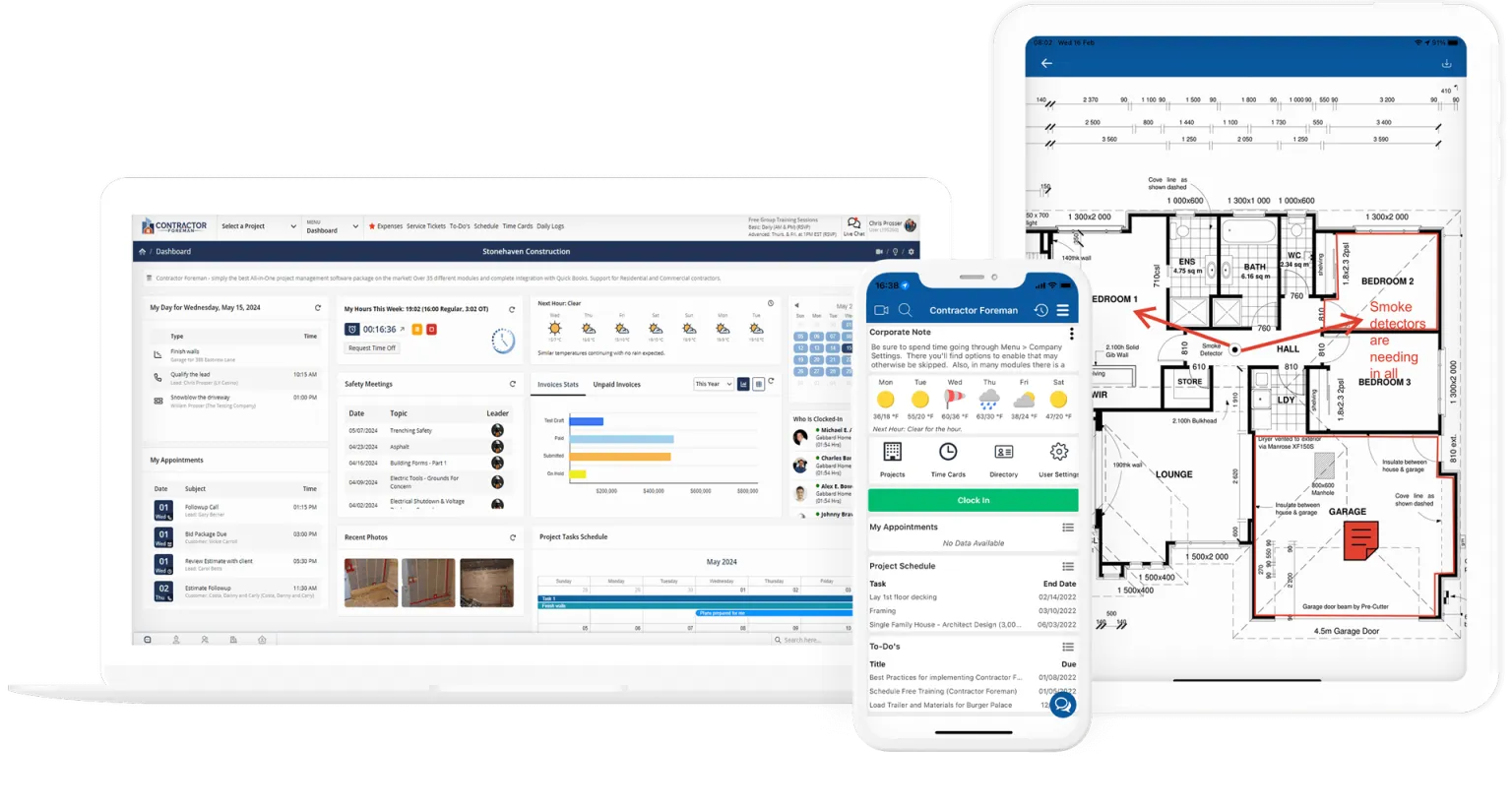
Project Management Dashboard
A core component of Contractor Foreman is the project management dashboard. This interface aggregates project details, allowing managers to review progress, budgets, and task completion in one location.
Typical information available within such dashboards includes:
- Project milestones
- Task assignments
- Project status updates
- Team activity logs
- Documentation records
Centralized dashboards can help reduce reliance on scattered reports and manual updates.
Estimating and Budgeting Tools
Accurate cost estimation is essential for construction projects. Contractor Foreman includes tools that allow users to create project estimates, develop cost breakdowns, and track expenses as work progresses.
Estimating features generally support:
- Labor cost calculations
- Material cost projections
- Bid preparation
- Budget monitoring
These functions help align initial project proposals with ongoing financial tracking.
Scheduling and Task Management
Construction projects rely heavily on scheduling coordination between crews, subcontractors, and suppliers. Contractor Foreman includes scheduling tools designed to assist with planning timelines and allocating responsibilities.
Common scheduling capabilities include:
- Task assignment
- Calendar-based project planning
- Timeline visualization
- Deadline tracking
These scheduling systems allow project managers to monitor project phases and ensure that tasks remain aligned with construction timelines.
Document and File Management
Construction work generates a large volume of documentation, including permits, blueprints, contracts, change orders, and inspection reports. Contractor Foreman offers document storage and organization tools to manage these records.
Digital document management typically includes:
- File uploads and storage
- Document categorization
- Version tracking
- Access permissions for team members
Maintaining organized documentation can help improve compliance and reduce information loss.
Field Reporting and Daily Logs
Field teams often need to document daily activities, safety observations, and job site progress. Contractor Foreman includes reporting tools that allow field staff to record updates directly from project sites.
Field reporting features commonly support:
- Daily construction logs
- Equipment tracking
- Incident reporting
- Site progress updates
These records can contribute to more transparent project documentation.
Financial Tracking and Invoicing
Financial management is another central aspect of construction operations. Contractor Foreman includes financial tracking features that allow companies to monitor expenses, generate invoices, and record payments.
Typical financial functions may include:
- Invoice generation
- Expense tracking
- Payment recording
- Financial summaries
These tools help maintain financial visibility across projects.
Common Use Cases
Construction management platforms such as Contractor Foreman are used in several practical scenarios across the construction industry.
Project Coordination
Construction managers often use the platform to coordinate multiple teams involved in a project. By maintaining a centralized system for schedules, documents, and communications, managers can monitor progress without relying on separate tools.
Bid Preparation and Estimation
Contractors preparing proposals for new projects may use estimating modules to calculate projected costs. This allows businesses to generate structured estimates while maintaining consistency with previous bids.
Job Site Reporting
Supervisors and site managers frequently use digital reporting tools to record daily progress, site conditions, and workforce activity. These logs can provide documentation for project reviews or compliance requirements.
Subcontractor Management
General contractors working with subcontractors may use Contractor Foreman to manage work assignments, project documents, and schedules associated with external partners.
Financial Oversight
Construction firms often rely on financial tracking systems within the platform to monitor project budgets and maintain financial records for accounting purposes.
Potential Advantages
Construction management software platforms offer several potential operational benefits when implemented effectively.
Centralized Information Management
A major advantage is the ability to store project information within a single system. Instead of navigating multiple spreadsheets or communication channels, project data becomes easier to locate and review.
Improved Communication
Centralized project platforms may help streamline communication between office teams and field crews. Shared access to documents, schedules, and updates can reduce misunderstandings.
Administrative Efficiency
Automated reporting, digital documentation, and integrated financial tools may reduce time spent on manual administrative tasks.
Project Transparency
Digital dashboards and reporting systems provide managers with clearer visibility into project timelines, cost performance, and team activities.
Record Keeping
Maintaining organized records of project activities, safety reports, and documentation may assist companies during audits, project evaluations, or contract reviews.
Limitations & Considerations
While construction management software can support operational workflows, there are several considerations that organizations may evaluate before adopting such tools.
Learning Curve
Construction teams transitioning from manual processes to digital platforms may require time to become familiar with the system interface and features.
Implementation Effort
Introducing a new project management platform often involves data migration, workflow adjustments, and training across teams.
Feature Complexity
Construction software platforms sometimes contain a large number of modules. Organizations may not require every feature, which can create complexity during adoption.
Integration Needs
Some construction businesses rely on existing accounting software, design tools, or document systems. Compatibility with these systems can be an important factor.
Organizational Fit
The usefulness of a platform often depends on the specific needs of a construction company, including company size, project types, and internal workflows.
Who Should Consider Contractor
Contractor Foreman may be relevant for several types of construction professionals.
Small to Mid-Sized Construction Companies
Smaller construction firms that need a centralized system for project documentation, budgeting, and scheduling may find construction management software helpful for organizing operations.
General Contractors Managing Multiple Projects
Companies overseeing several active construction projects may benefit from centralized dashboards and scheduling tools that provide visibility across multiple jobs.
Subcontractors Seeking Administrative Structure
Specialty contractors who manage recurring projects and workforce coordination may use such platforms to standardize documentation and reporting.
Construction Firms Transitioning to Digital Workflows
Organizations moving away from paper-based or spreadsheet-based processes may explore construction management software to digitize their operations.
Who May Want to Avoid It
Not every construction organization requires a full project management platform.
Very Small Contractors
Independent contractors managing only a few projects at a time may find manual systems or simpler tools sufficient for their needs.
Businesses With Established Internal Systems
Companies that already rely on integrated enterprise systems may not require an additional standalone construction management platform.
Teams Resistant to Software Adoption
Organizations where field teams have limited access to mobile devices or prefer traditional workflows may encounter adoption challenges.
Comparison With Similar Tools
Contractor Foreman operates within a competitive market of construction management software platforms. Many tools in this category share similar objectives but differ in feature sets, pricing structures, and target audiences.
Some construction management platforms emphasize enterprise-scale project management with extensive integrations and advanced analytics. These systems often cater to large construction firms managing complex infrastructure projects.
Other tools are designed specifically for small contractors and focus on simplified workflows, estimating tools, and basic scheduling features.
Contractor Foreman generally sits in the middle of this spectrum, combining a broad set of project management functions with tools intended for operational oversight. As with any software platform, the relevance of the system often depends on how closely its feature set aligns with the operational requirements of a particular construction business.
Final Educational Summary
Construction projects involve intricate coordination between teams, resources, and timelines. As project complexity increases, traditional management methods can create challenges related to documentation, communication, and financial oversight.
Construction management platforms such as Contractor Foreman represent one approach to addressing these operational challenges. By integrating project management, scheduling, documentation, and financial tracking into a centralized digital system, these tools aim to streamline workflows across construction organizations.
However, like any technology solution, their effectiveness depends on factors such as organizational structure, project scale, and team readiness for digital processes. Evaluating both the potential benefits and practical considerations can help construction professionals determine whether software platforms like Contractor Foreman fit within their operational strategies.
Disclosure: This article is for educational and informational purposes only. Some links on this website may be affiliate links, but this does not influence our editorial content or evaluations.
