
Introduction
E-commerce infrastructure has evolved rapidly over the past decade, driven by increasing expectations around user experience, site performance, and visual customization. Online merchants are no longer limited to static templates; instead, they require adaptable frameworks capable of supporting branding, scalability, and mobile responsiveness. This demand has led to the emergence of specialized theme development providers within platforms like Shopify.
Theme providers occupy a distinct niche within the broader e-commerce tooling ecosystem. Rather than functioning as standalone software applications, they operate as design and development frameworks that shape how storefronts behave and appear. These tools address a recurring challenge: how to balance design flexibility with technical simplicity.
Out of the Sandbox is one such provider that has gained attention within the Shopify ecosystem. It offers a range of premium themes and customization tools designed to support merchants with varying technical expertise. Understanding its structure and practical applications requires examining both its capabilities and its limitations within real-world use cases.
What Is Out of the Sandbox?
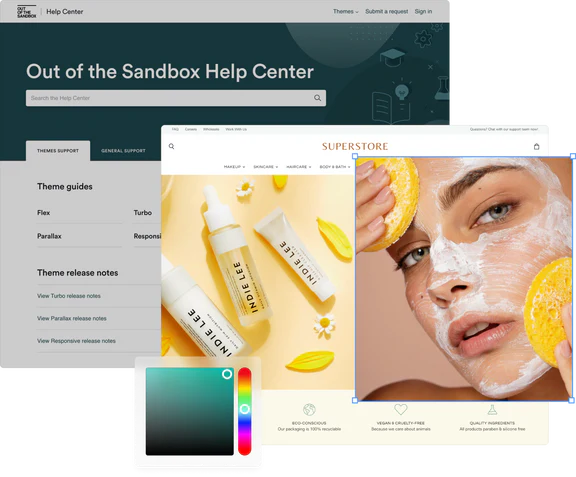
Out of the Sandbox is a Shopify-focused theme development company that produces customizable storefront templates and related tools. It is not a standalone e-commerce platform; instead, it operates within the Shopify environment, offering design frameworks that merchants can install and configure.
The platform primarily falls under the category of Shopify theme development and customization tools. Its products are designed to influence the visual presentation, navigation structure, and interactive behavior of online stores.
Unlike generic website builders, Out of the Sandbox focuses on pre-built themes that include configurable components such as layouts, typography systems, product display modules, and performance optimizations. These themes are intended to reduce the need for extensive custom coding while still allowing a degree of flexibility for developers.
In addition to themes, the company provides tools that assist in managing theme updates and configurations, particularly for users who maintain complex storefronts over time.
Key Features Explained
Modular Theme Architecture
Out of the Sandbox themes are built using a modular approach. This means that different sections of a website—such as product pages, banners, and navigation menus—can be rearranged or customized independently. This structure supports flexibility without requiring deep technical intervention.
Advanced Customization Settings
The themes include a wide range of configuration options accessible through Shopify’s theme editor. Users can adjust layout spacing, color schemes, typography, and content placement. These controls are designed to allow non-developers to modify design elements while maintaining consistency.
Performance Optimization
Site speed is a critical factor in e-commerce, influencing both user experience and search engine rankings. Out of the Sandbox themes are generally structured to minimize unnecessary scripts and optimize asset loading. This contributes to faster page rendering, particularly on mobile devices.
Built-in Responsive Design
Mobile commerce continues to account for a significant portion of online transactions. The themes are designed with responsive layouts, ensuring compatibility across various screen sizes. This eliminates the need for separate mobile design configurations.
Theme Updater Tool
A notable feature is the Theme Updater, which allows users to update their theme versions without manually reapplying customizations. This is particularly relevant for merchants who frequently modify their store design and want to maintain compatibility with new Shopify features.
Integration Compatibility
Out of the Sandbox themes are built to work with a wide range of Shopify apps. This includes tools for inventory management, marketing automation, analytics, and customer engagement. The themes are structured to minimize conflicts with third-party integrations.
Common Use Cases
Independent Online Retailers
Small to medium-sized businesses often use Out of the Sandbox themes to establish a professional-looking storefront without hiring a full development team. The pre-built layouts provide a structured starting point.
Brand-Focused E-commerce Stores
Companies that prioritize visual identity and storytelling may use these themes to create distinctive layouts. The customization options allow for tailored branding without extensive coding.
Developers and Agencies
Web developers and digital agencies frequently use Out of the Sandbox themes as a foundation for client projects. The modular design enables them to implement custom features while reducing development time.
High-Volume Product Catalogs
Some themes offered by Out of the Sandbox are designed to handle large inventories. Features like advanced filtering and structured navigation support stores with extensive product listings.
Content-Driven Commerce
Stores that incorporate blogs, lookbooks, or editorial content alongside products can use these themes to integrate content and commerce in a cohesive layout.
Potential Advantages
Structured Design Without Full Custom Development
One of the primary advantages is the ability to achieve a professional storefront without building a site from scratch. This reduces development complexity while maintaining a level of customization.
Scalability Within Shopify
As a Shopify-compatible solution, Out of the Sandbox themes can scale alongside a business. Merchants can expand product offerings and integrate additional tools without redesigning their entire site.
Regular Updates and Maintenance Tools
The inclusion of a theme updater simplifies ongoing maintenance. This reduces the technical burden associated with keeping a storefront aligned with platform updates.
Balanced Customization Options
The themes provide a middle ground between rigid templates and fully custom-coded solutions. Users can make meaningful adjustments without needing extensive programming knowledge.
Performance Considerations
Optimized code structure contributes to improved loading speeds, which can impact user engagement and search engine visibility.
Limitations & Considerations
Platform Dependency
Out of the Sandbox is designed specifically for Shopify. Businesses operating on other platforms cannot use these themes, limiting its applicability.
Learning Curve for Advanced Features
While basic customization is accessible, more advanced modifications may still require knowledge of Shopify’s Liquid templating language. This can present challenges for non-technical users.
Cost Structure
Premium themes typically involve a one-time purchase cost. While this is common within the Shopify ecosystem, it may be a consideration for smaller businesses with limited budgets.
Customization Boundaries
Despite offering flexibility, themes still operate within predefined structures. Businesses with highly specific design requirements may find these limitations restrictive.
Dependence on Third-Party Apps
Certain functionalities may require additional Shopify apps, which can introduce complexity and additional costs over time.
Who Should Consider Sandbox
Shopify Store Owners Seeking Design Flexibility
Merchants who want to move beyond basic templates but are not ready for fully custom development may find this tool suitable.
Agencies Managing Multiple Client Stores
The modular design and update tools make it practical for agencies handling multiple Shopify projects.
Businesses Prioritizing Visual Presentation
Brands that rely on strong visual identity and storytelling can benefit from the customization options available.
Mid-Level Technical Users
Users with some familiarity with Shopify’s backend can take fuller advantage of the customization features.
Who May Want to Avoid It
Non-Shopify Users
Businesses operating on platforms like WooCommerce, Magento, or custom-built systems will not be able to utilize these themes.
Those Requiring Fully Custom Interfaces
Companies with highly specialized design or functionality needs may require a custom-built solution instead.
Beginners Seeking Minimal Setup
Users looking for a completely hands-off setup may find the customization options overwhelming.
Budget-Constrained Startups
Early-stage businesses with strict financial limitations might prefer free or lower-cost alternatives initially.
Comparison With Similar Tools
Shopify Free Themes
Shopify’s built-in themes provide a basic level of functionality at no additional cost. However, they typically offer fewer customization options compared to Out of the Sandbox themes.
ThemeForest Shopify Themes
ThemeForest hosts a wide variety of third-party themes with varying quality and support levels. Out of the Sandbox tends to emphasize structured development and consistent updates, whereas ThemeForest options can be more variable.
Custom Theme Development
Hiring a developer to build a custom Shopify theme provides maximum flexibility. However, it involves significantly higher costs and longer development timelines compared to pre-built themes.
Other Premium Theme Providers
Other companies in the Shopify ecosystem offer premium themes with similar capabilities. Differences often lie in design philosophy, update frequency, and support infrastructure rather than core functionality.
Final Educational Summary
Out of the Sandbox represents a specialized approach to Shopify theme development, focusing on structured customization, modular design, and ongoing maintainability. It addresses a specific need within e-commerce: enabling merchants to build visually distinct and functional storefronts without engaging in full-scale development.
Its value lies in balancing flexibility with usability. While it does not eliminate the need for technical understanding entirely, it reduces the barrier to entry for creating a professional online store. At the same time, its limitations—particularly platform dependency and customization boundaries—highlight the importance of aligning tool selection with business requirements.
From an analytical standpoint, Out of the Sandbox fits within a broader category of e-commerce design frameworks that prioritize scalability and performance. Its role is not to replace the underlying platform but to enhance how that platform is presented and experienced by end users.
Disclosure: This article is for educational and informational purposes only. Some links on this website may be affiliate links, but this does not influence our editorial content or evaluations.
