
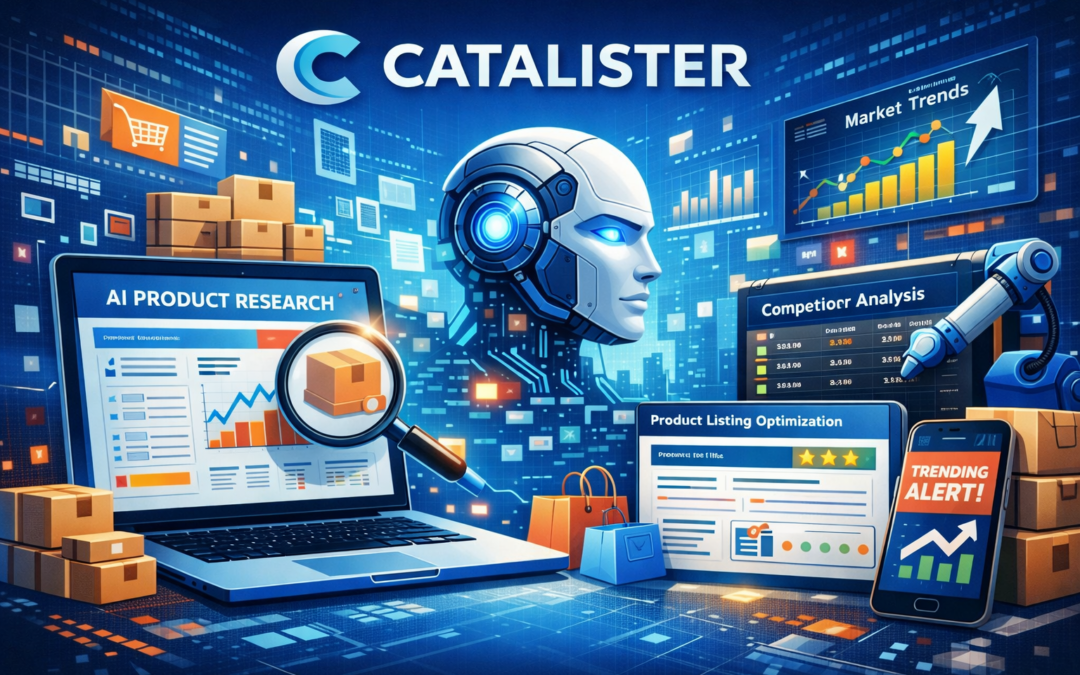
In the rapidly evolving world of e-commerce, efficiency and precision have become essential for online sellers. The ability to quickly identify profitable products, optimize listings, and respond to market trends can determine the success or failure of a digital storefront. Platforms like Catalister have emerged to assist sellers by harnessing artificial intelligence (AI) and data-driven insights to streamline product research and listing optimization. This article examines the features, functionalities, and potential impact of Catalister within the e-commerce ecosystem.
Understanding Catalister
Catalister is an AI-driven platform designed to help e-commerce sellers enhance their product research and listing strategies. By leveraging advanced algorithms, Catalister aims to simplify complex tasks such as identifying market trends, evaluating product viability, and optimizing listings for search engines and consumer engagement. Unlike traditional manual research methods, which can be time-consuming and prone to human error, AI platforms like Catalister can process vast datasets to deliver actionable insights in a fraction of the time.
At its core, Catalister serves two main purposes: enabling sellers to find profitable products efficiently and assisting in the creation of optimized product listings. This dual approach addresses two critical pain points in e-commerce operations: product discovery and visibility. By integrating AI, the platform can analyze competitor data, consumer behavior, and historical sales trends to suggest products that are more likely to perform well in the market.
Key Features of Catalister
1. AI-Powered Product Research
One of Catalister’s primary features is its product research capability. Traditional product research often involves manually sifting through marketplaces, analyzing reviews, and estimating potential sales. Catalister automates much of this process. The AI engine evaluates multiple parameters, including market demand, competition level, pricing trends, and seasonal fluctuations, to identify products that may yield higher returns.
This automated research allows sellers to focus on strategy and decision-making rather than data collection. Furthermore, the platform often provides insights into emerging trends, giving sellers a competitive advantage by highlighting products before they saturate the market.
2. Listing Optimization Assistance
Creating an effective product listing goes beyond simply uploading images and descriptions. It requires strategic keyword placement, compelling content, and optimization for search algorithms. Catalister assists in this area by analyzing existing listings, competitor performance, and relevant search data. The platform then provides recommendations for enhancing product titles, descriptions, bullet points, and tags to improve visibility and conversion rates.
This feature is particularly useful for sellers aiming to maximize organic traffic from marketplaces and search engines. By optimizing listings according to AI-generated insights, sellers can increase the likelihood of their products appearing in relevant searches and engaging potential customers effectively.
3. Competitor Analysis
Catalister includes tools for analyzing competitors’ strategies. Understanding how competing products are performing, what keywords they target, and how they price their items is vital for making informed decisions. The platform offers detailed reports and comparative metrics, enabling sellers to benchmark their products against industry standards and identify opportunities for differentiation.
Competitor insights also aid in spotting gaps in the market or areas where demand exceeds supply, which can inform inventory planning and marketing strategies.
4. Trend Monitoring and Analytics
E-commerce markets are highly dynamic, with consumer preferences and trends shifting rapidly. Catalister provides trend monitoring tools that track changes in product popularity, pricing patterns, and seasonal demand fluctuations. By keeping sellers informed of these trends, the platform supports timely product launches and promotional campaigns.
Analytics dashboards present data in a visual and digestible format, allowing sellers to make data-backed decisions without needing advanced statistical expertise. This transparency in analytics is valuable for sellers seeking to understand the rationale behind AI-generated recommendations.
5. Integration Capabilities
Many e-commerce sellers operate across multiple platforms, such as Amazon, Shopify, or eBay. Catalister is designed with integration in mind, allowing sellers to synchronize data across their preferred marketplaces. This interoperability reduces manual effort and ensures that insights and optimizations are consistently applied across all sales channels.
Integration features also facilitate automated updates to listings, enabling sellers to implement AI recommendations quickly and maintain a competitive edge in real-time.
Potential Benefits for E-Commerce Sellers
Adopting Catalister can offer several benefits, particularly for small and medium-sized businesses that may lack extensive resources for in-depth market research. Some notable advantages include:
- Time Efficiency: Automation of research and listing optimization saves significant time compared to manual methods.
- Data-Driven Decisions: AI insights reduce reliance on guesswork, increasing the probability of selecting profitable products.
- Enhanced Visibility: Optimized listings improve search engine and marketplace ranking, potentially increasing traffic and sales.
- Competitive Advantage: Monitoring competitors and market trends enables sellers to act proactively and differentiate their offerings.
- Scalability: AI tools allow sellers to handle a larger inventory or product catalog without proportional increases in workload.
Limitations and Considerations
While Catalister offers a range of useful functionalities, it is important to recognize its limitations:
- Dependence on Data Quality: AI recommendations are only as good as the underlying data. Inaccurate or incomplete marketplace data can affect the quality of insights.
- Learning Curve: Sellers unfamiliar with AI platforms may need time to understand and interpret the analytics and recommendations effectively.
- Market Saturation Risks: Even with AI guidance, selecting trending products does not guarantee success, especially in highly competitive markets.
- Subscription Costs: Like many AI SaaS platforms, Catalister may require subscription fees, which should be weighed against expected ROI.
Understanding these considerations helps sellers approach the platform strategically and avoid overreliance on automated suggestions.
Use Cases in E-Commerce
Catalister can be applied in various scenarios, including:
- New Product Launches: Identifying products with high market potential and preparing optimized listings before release.
- Inventory Expansion: Researching and evaluating potential additions to an existing product catalog.
- Marketing Strategy Development: Using competitor and trend analytics to inform pricing, promotional campaigns, and seasonal strategies.
- Cross-Marketplace Management: Coordinating product listings and performance metrics across multiple e-commerce platforms to ensure consistency and efficiency.
These use cases demonstrate the versatility of AI in supporting strategic decisions for online sellers.
Educational and Strategic Implications
Beyond operational efficiency, platforms like Catalister also serve an educational function for e-commerce professionals. By exposing sellers to data-driven methodologies, keyword optimization strategies, and competitive analysis techniques, Catalister can enhance overall market literacy. Users gain practical experience in interpreting AI-generated insights, which can inform broader business strategy beyond individual product listings.
Moreover, as AI adoption grows, familiarity with such tools is becoming increasingly relevant in digital marketing, e-commerce management, and data analytics fields.
Conclusion
Catalister represents a growing category of AI-assisted e-commerce tools aimed at improving product research and listing optimization. Its features—ranging from automated product discovery and listing enhancement to competitor analysis and trend monitoring—reflect the increasing integration of AI in online retail operations. While it offers significant efficiency and insight advantages, users must remain mindful of data quality, learning requirements, and market dynamics.
Overall, Catalister exemplifies how AI can support more informed, strategic decision-making in e-commerce. Sellers leveraging these insights can potentially reduce operational inefficiencies, improve visibility, and make better-informed product decisions. As the platform evolves, continued attention to accuracy, user experience, and integration with e-commerce ecosystems will determine its ongoing relevance and impact.
Disclosure: This article is informational and educational. It is not promotional, does not contain affiliate links, and does not suggest purchase or endorsement.