
Introduction
Modern B2B sales and marketing teams operate in an environment where data accuracy, regulatory compliance, and timing are critical to success. As outbound sales strategies evolve, organizations increasingly rely on sales intelligence platforms to identify decision-makers, validate contact data, and prioritize accounts with higher conversion potential. Cognism is one such platform positioned within the B2B data and sales intelligence category, offering access to company and contact-level insights designed to support prospecting, account-based marketing, and revenue operations.
This article provides a comprehensive and educational overview of Cognism, examining its core capabilities, data approach, compliance model, integrations, use cases, and operational limitations. The goal is to explain how the platform functions, who it is designed for, and where it fits within the broader sales intelligence ecosystem.
What Cognism Is and What It Aims to Do
Cognism is a B2B sales intelligence platform focused on providing compliant business contact data, firmographic insights, and buying signals. It is primarily designed to help revenue teams identify, research, and engage potential customers across international markets.
Unlike general-purpose databases, Cognism emphasizes real-time data verification, regulatory compliance (particularly GDPR), and sales-focused workflows. The platform supports outbound prospecting, account-based strategies, and pipeline development by offering structured datasets that sales teams can integrate into their existing CRM and sales engagement tools.
At a high level, Cognism aims to reduce manual research time while improving the quality of outbound sales outreach.
Core Platform Features
B2B Contact and Company Data
At the foundation of Cognism is its database of B2B contacts and companies. The platform provides information such as:
- Professional email addresses
- Direct-dial phone numbers (where available)
- Job titles and seniority levels
- Company size, industry, and location
- Organizational hierarchy indicators
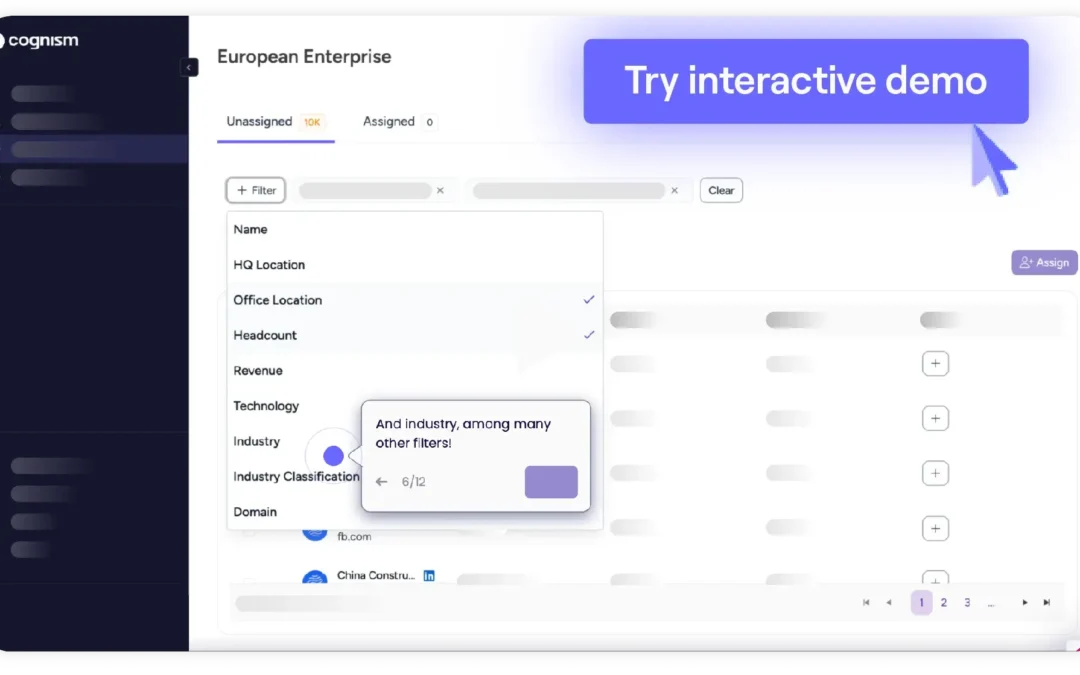
The data is structured to support segmentation and targeting, allowing users to filter prospects by role, region, company attributes, or growth indicators.
Mobile Phone Data Coverage
One of Cognism’s distinguishing characteristics is its emphasis on mobile phone data for business contacts. This feature is particularly relevant for outbound sales teams that rely on phone-based prospecting. The availability and accuracy of mobile numbers vary by region and role, but the platform prioritizes this data point as part of its value proposition.
Data Enrichment and CRM Sync
Cognism integrates with common CRM systems to enrich existing records. This includes:
- Filling in missing contact details
- Updating outdated company information
- Standardizing data fields for reporting
Enrichment workflows are designed to reduce data decay within CRMs and improve overall data hygiene.
Intent and Buying Signals
The platform incorporates intent signals that aim to indicate when a company may be actively researching or considering solutions in a specific category. These signals are used to help sales teams prioritize outreach based on inferred purchase readiness rather than static firmographics alone.
While intent data does not guarantee buying intent, it can provide additional context for timing outreach.
Data Accuracy and Verification Approach
Data accuracy is a central concern for any sales intelligence tool. Cognism uses a combination of automated data collection, verification processes, and human review to maintain its datasets.
Key aspects of its approach include:
- Continuous data refresh cycles
- Automated validation against multiple sources
- Manual review for high-value or frequently used records
Despite these processes, data accuracy can still vary depending on geography, job role volatility, and company size. Users typically achieve the best results when Cognism data is used as a starting point for outreach rather than a final verification source.
Compliance and Data Privacy Focus
One of Cognism’s most prominent positioning elements is its emphasis on data compliance, particularly in regions governed by strict privacy regulations.
GDPR and Regional Compliance
Cognism positions its data collection and processing practices around compliance with GDPR and related data protection frameworks. This includes:
- Lawful data processing bases
- Opt-out mechanisms
- Suppression of restricted contacts
For organizations operating in Europe or working with EU-based prospects, this compliance orientation can reduce regulatory risk when compared with less regulated data sources.
Compliance as an Operational Feature
Rather than treating compliance as a legal afterthought, Cognism embeds it into its workflows. Users are informed about permissible outreach contexts, and certain data fields may be restricted or suppressed depending on jurisdiction.
Integrations and Sales Stack Compatibility
Cognism is designed to function as part of a broader revenue technology stack rather than as a standalone tool.
CRM Integrations
The platform commonly integrates with CRM systems to:
- Push new leads and accounts
- Enrich existing records
- Sync engagement activity
This allows sales teams to operate primarily within their CRM while leveraging Cognism as a data layer.
Sales Engagement and Enablement Cognism
Cognism also connects with sales engagement platforms, enabling users to trigger sequences, calls, or outreach workflows using enriched contact data. These integrations help streamline prospecting without requiring frequent context switching.
Common Use Cases
Outbound Sales Prospecting
Sales development representatives often use Cognism to build targeted prospect lists based on role, industry, and region. The availability of direct contact data supports faster initial outreach compared to manual research methods.
Account-Based Marketing Support
For account-based strategies, Cognism provides insights into organizational structures and key stakeholders. Marketing and sales teams can coordinate outreach to multiple decision-makers within the same account using consistent data.
Market Expansion and International Sales
Organizations expanding into new geographic markets may use Cognism to identify region-specific contacts and validate compliance requirements. This is particularly relevant for companies entering European markets with stricter data regulations.
CRM Data Cleanup and Enrichment
Revenue operations teams may use Cognism periodically to refresh CRM records, identify incomplete profiles, and reduce data decay over time.
Platform Strengths
Several characteristics contribute to Cognism’s adoption among mid-sized and enterprise B2B teams:
- Strong emphasis on regulatory compliance
- Focus on mobile phone data availability
- Structured data suitable for outbound workflows
- Compatibility with established sales technology stacks
These strengths align most closely with organizations that rely on outbound sales motions and operate across regulated markets.
Limitations and Considerations
Despite its capabilities, Cognism is not universally suitable for every organization.
Data Coverage Variability
Data depth and accuracy can vary significantly by region and industry. Smaller companies, niche sectors, or emerging markets may have less comprehensive coverage.
Learning Curve
Teams unfamiliar with sales intelligence platforms may require onboarding time to fully utilize advanced filters, enrichment workflows, and compliance settings.
Cost Structure
Cognism is generally positioned for professional sales teams rather than early-stage startups. Organizations with limited outbound volume may find it more than they require.
Dependency on External Tools
While Cognism integrates well with CRMs and engagement platforms, it is not a complete sales execution solution. Teams still need complementary tools for email automation, calling, and analytics.
Comparison Context Within the Sales Intelligence Landscape
Within the broader market of B2B data providers, Cognism is often compared with other sales intelligence platforms that offer contact databases, enrichment, and intent signals. Its differentiation lies primarily in:
- Compliance-led positioning
- Emphasis on phone-based prospecting
- European market strength
However, tool selection ultimately depends on regional focus, sales methodology, budget, and internal workflows.
Who Typically Uses Cognism
Cognism is most commonly adopted by:
- B2B SaaS companies with outbound sales teams
- Recruitment and staffing firms
- Consulting and professional services organizations
- Enterprise sales organizations with compliance requirements
It is less commonly used by consumer-focused businesses or companies that rely exclusively on inbound marketing.
Operational Best Practices
Organizations using Cognism effectively often follow these practices:
- Combine Cognism data with internal qualification processes
- Use intent data as a prioritization signal, not a guarantee
- Regularly refresh CRM data rather than relying on one-time imports
- Train sales teams on compliance-aware outreach
These practices help maximize value while minimizing data misuse or inefficiencies.
Final Assessment
Cognism functions as a structured, compliance-oriented sales intelligence platform designed to support outbound prospecting, account-based strategies, and CRM data enrichment. Its focus on regulated markets and direct contact data distinguishes it from more generalized databases.
For organizations with established sales processes, dedicated revenue teams, and international outreach needs, Cognism can serve as a foundational data layer. However, its effectiveness depends heavily on how well it is integrated into existing workflows and whether its coverage aligns with target markets.
As with any sales intelligence solution, Cognism is most effective when used as part of a broader strategy rather than as a standalone solution.
Disclosure
This article is published for educational and informational purposes only. It does not constitute endorsement, promotional content, or purchasing advice. Product features and data availability may change over time. Readers should evaluate software independently based on their specific operational and compliance requirements.