
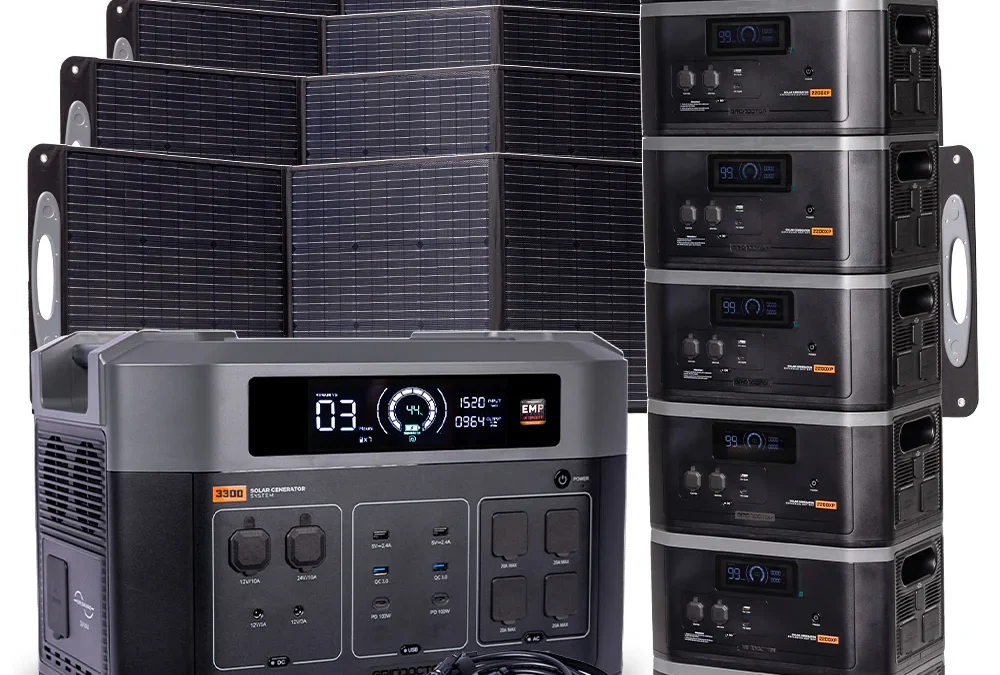
Investing in a solar generator like the Grid Doctor 3300 is a major decision for your emergency preparedness strategy. This guide breaks down what to look for and how to maximize your unit’s lifespan.
What to Look For
When buying a Grid Doctor 3300, confirm you are getting the EMP Intercept Technology version. Some older refurbished units (Grid Doctor 2200) may not have the hardening or the stackable “Power Tower” capability.
- Inverter Rating: Ensure it is the 3,300W model if you plan to run a furnace or large tools.
- Battery Chemistry: Always verify the “LiFePO4” label, which ensures 3,500+ charge cycles.
3 Use Case Scenarios
- The 72-Hour Blackout: Use the base unit to run your refrigerator (approx. 15-24 hours) and charge phones. Use the included 200W solar panel to “top off” during the day.
- The Winter Storm: Add one 3300XP expansion battery. This provides enough overhead to run a small space heater or furnace fan on and off for 2 days.
- Off-Grid Cabin: Stack 4+ expansion batteries. This creates a semi-permanent power grid that can handle lights, a microwave, and a water pump indefinitely with 800W of solar input.
Setup & Care Tips
- The First Charge: Always charge to 100% via a wall outlet before first use to calibrate the BMS (Battery Management System).
- Storage: Keep the unit at 50-70% charge if storing for months. Check the level every 90 days.
- Solar Placement: The included panels are IP68 waterproof. Don’t be afraid to leave them in the rain, but ensure they are angled at toward the sun for maximum efficiency.
Common Mistakes
- Overloading the Surge: While it surges to 6,600W, trying to start an AC unit and a microwave simultaneously may trip the internal breaker.
- Blocking Vents: The unit has high-speed fans. Never cover the side vents while under heavy load.