
Introduction
Email remains one of the most widely used digital communication channels in business, yet achieving consistent inbox placement has become increasingly complex. Over the past decade, mailbox providers such as Gmail and Outlook have refined their filtering systems to prioritize user experience and reduce spam. As a result, legitimate senders frequently encounter deliverability challenges, including low inbox placement rates, spam folder filtering, throttling, and sender reputation damage.
This environment has given rise to a specialized category of software known as email deliverability tools. These platforms are designed to help organizations monitor, improve, and maintain email sender reputation while increasing the likelihood that messages reach primary inboxes rather than spam folders. Inbox placement optimization, IP warming, domain reputation management, and engagement simulation are now common concepts within this field.
InboxAlly operates within this technical niche. Rather than functioning as a traditional email marketing platform, it focuses specifically on inbox placement and sender reputation conditioning. Understanding how such a system works requires examining both the broader mechanics of email filtering and the operational features of the tool itself.
What Is InboxAlly?
InboxAlly is an email deliverability improvement platform designed to help senders enhance inbox placement rates and rebuild sender reputation. It falls into the category of email deliverability software and inbox placement tools rather than standard email campaign management systems.
Unlike platforms that create and distribute newsletters, InboxAlly interacts with existing outbound email campaigns sent from other systems. It is typically used alongside email marketing software, cold outreach tools, CRM-based email systems, or transactional email services.
The platform’s core function centers on engagement simulation and positive interaction signaling. Modern spam filters analyze behavioral signals such as opens, replies, and moving messages from spam to inbox folders. InboxAlly aims to influence these signals by generating controlled interactions with sent emails, thereby improving sender trust metrics over time.
This positions InboxAlly within a growing subset of deliverability optimization platforms that focus on reputation repair, domain warming, and inbox placement stabilization.
Key Features Explained
Engagement-Based Deliverability Conditioning
InboxAlly’s primary mechanism revolves around generating engagement actions on sent emails. These actions can include:
- Opening messages
- Marking messages as important
- Moving messages from spam to inbox
- Replying to messages
Spam filtering algorithms increasingly rely on recipient engagement data to assess sender quality. By generating consistent positive engagement signals, the platform attempts to influence reputation scoring systems.
IP and Domain Warming Support
New sending domains and IP addresses often face deliverability challenges because they lack historical reputation data. InboxAlly is frequently used during IP warming or domain warming phases to establish positive engagement patterns early in the lifecycle of a sending identity.
This feature is particularly relevant for businesses migrating to new email service providers or launching new outreach campaigns.
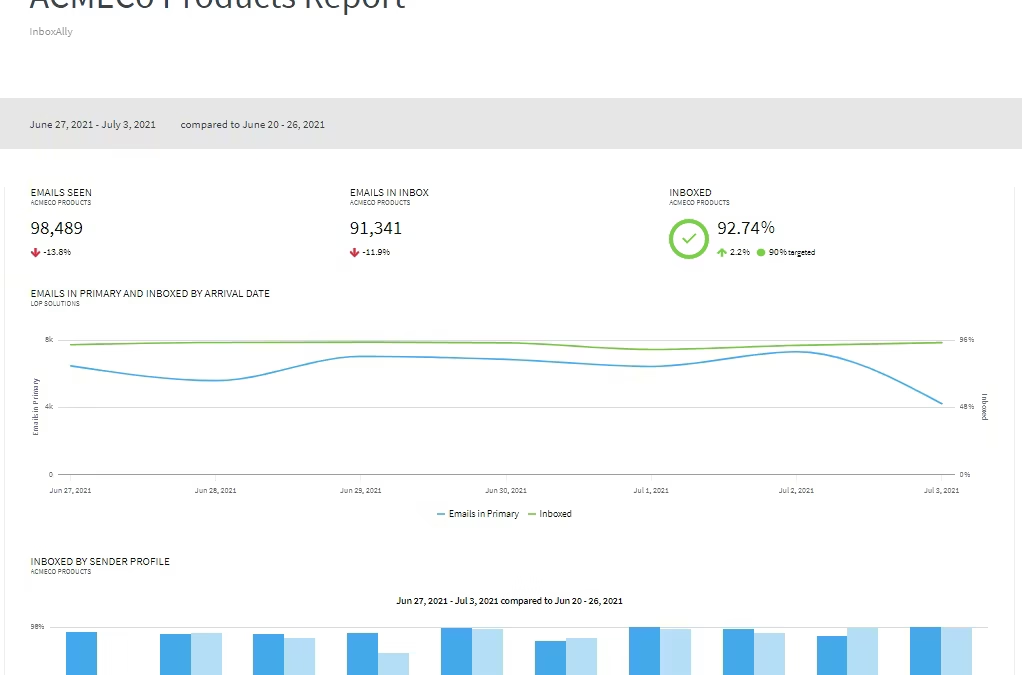
Deliverability Monitoring Dashboard
InboxAlly provides a reporting interface where users can monitor engagement activity, spam placement signals, and reputation trends. While it does not replace comprehensive deliverability monitoring tools that track blacklist status or full inbox placement testing, it offers visibility into engagement metrics influenced by the platform.
Spam Folder Recovery Assistance
For senders whose emails consistently land in spam folders, InboxAlly is often positioned as a remediation tool. By simulating corrective engagement behavior—such as moving emails from spam to inbox—it aims to signal to mailbox providers that messages are desired rather than unwanted.
Integration With External Email Platforms
InboxAlly is not a standalone email sender. It integrates with or works alongside existing email marketing software, cold email tools, and CRM-based sending systems. This separation allows organizations to maintain their current campaign workflows while layering deliverability support on top.
Common Use Cases
Cold Email Outreach Campaigns
Sales teams and lead generation agencies frequently struggle with inbox placement due to high-volume outbound messaging. InboxAlly is often used in cold email environments to stabilize deliverability metrics and reduce spam filtering risks.
Agency-Level Email Account Management
Digital marketing agencies managing multiple client domains may deploy deliverability tools to maintain sender reputation across accounts. InboxAlly can be used to support ongoing inbox placement conditioning for multiple domains.
Reputation Recovery After Deliverability Decline
If a domain experiences sudden drops in inbox placement rates—often due to spam complaints or low engagement—InboxAlly may be used as part of a recovery strategy.
New Domain Launches
Organizations launching a new brand, subdomain, or outreach campaign may use deliverability conditioning during early sending stages to build a positive sender footprint.
High-Volume B2B Email Sending
B2B communication strategies often rely on direct outreach. InboxAlly is sometimes implemented in workflows where high sending volumes require additional sender reputation management.
Potential Advantages
Focused Deliverability Specialization
Unlike all-in-one email marketing platforms, InboxAlly concentrates specifically on inbox placement optimization. This narrow specialization can appeal to organizations seeking technical improvements in sender reputation rather than campaign design tools.
Engagement Signal Reinforcement
Given the increasing role of user engagement metrics in spam filtering algorithms, engagement simulation may help reinforce positive behavioral signals associated with a sending domain.
Recovery-Oriented Utility
InboxAlly is often discussed in contexts involving reputation repair. When sender scores decline, structured engagement activity may contribute to gradual reputation stabilization.
Compatibility With Existing Email Systems
Because it works alongside established email marketing tools, InboxAlly does not require full migration from existing infrastructure. This can simplify implementation in organizations with established outbound workflows.
Potential Improvement in Inbox Placement Rates
In certain scenarios, structured engagement activity may correlate with improved inbox placement rates, particularly during IP warming or after spam placement issues.
Limitations & Considerations
Does Not Replace Email List Hygiene
InboxAlly does not clean email lists or validate contacts. Poor list quality, high bounce rates, or spam traps can still damage sender reputation regardless of engagement simulation.
Compliance and Ethical Considerations
Email deliverability tools that simulate engagement raise questions about how mailbox providers interpret behavioral data. Organizations should consider compliance with email regulations such as CAN-SPAM, GDPR, and other regional privacy frameworks.
Not a Substitute for Content Quality
Spam filters evaluate multiple variables, including content relevance, sending frequency, complaint rates, and authentication protocols (SPF, DKIM, DMARC). InboxAlly does not replace proper technical configuration or high-quality messaging practices.
Limited Scope Compared to Full Deliverability Suites
Some email deliverability platforms offer comprehensive inbox placement testing, blacklist monitoring, and seed list analysis. InboxAlly primarily focuses on engagement conditioning rather than full-spectrum monitoring.
Cost Considerations for Smaller Senders
For small organizations with low email volume, advanced deliverability conditioning tools may not be necessary. Basic sender authentication and list hygiene practices may suffice in many cases.
Who Should Consider InboxAlly
InboxAlly may be relevant for:
- Businesses experiencing persistent spam folder placement
- Agencies managing multiple outbound email domains
- B2B sales teams running cold outreach campaigns
- Organizations launching new domains or IP addresses
- Senders recovering from reputation declines
These users typically operate in high-volume or performance-sensitive environments where inbox placement directly impacts lead generation or revenue operations.
Who May Want to Avoid It
InboxAlly may not be appropriate for:
- Small businesses sending occasional newsletters
- Organizations without consistent outbound email volume
- Users seeking a full email marketing automation platform
- Companies unwilling to manage deliverability strategy actively
In cases where deliverability challenges stem from poor list acquisition practices or compliance violations, engagement-based tools alone may not resolve underlying issues.
Comparison With Similar Tools
InboxAlly operates within a competitive ecosystem of email deliverability solutions.
Platforms such as Mailgun and SendGrid provide built-in deliverability tools alongside transactional email infrastructure. However, their core function is email transmission rather than engagement conditioning.
Deliverability monitoring platforms like GlockApps emphasize inbox placement testing, spam filter diagnostics, and blacklist monitoring. These tools focus on analysis rather than behavioral signal reinforcement.
Meanwhile, email marketing suites such as ActiveCampaign integrate automation workflows and audience segmentation but may not specialize in sender reputation repair.
InboxAlly distinguishes itself by concentrating on behavioral engagement simulation rather than analytics alone or full-service email automation. Organizations choosing among these categories should clarify whether their primary need involves monitoring, sending infrastructure, automation, or reputation conditioning.
How Does InboxAlly Fit Into Modern Email Infrastructure?
Email deliverability increasingly depends on layered strategy. Authentication standards such as SPF, DKIM, and DMARC establish baseline legitimacy. List hygiene practices reduce spam complaints and hard bounces. Content optimization enhances engagement. Monitoring tools detect placement issues.
InboxAlly fits into this ecosystem as a supplementary layer focused on engagement-based trust reinforcement. It does not eliminate the need for technical compliance or content quality, but instead attempts to influence behavioral metrics that mailbox providers monitor.
For organizations with mature outbound strategies, this layer may complement broader deliverability management efforts.
Broader Context: Why Inbox Placement Matters
Inbox placement rates directly affect email campaign performance metrics such as open rate, click-through rate, and response rate. Even well-designed campaigns produce limited results if filtered into spam folders.
Search interest around terms like “improve email deliverability,” “increase inbox placement,” and “email sender reputation repair” reflects the growing complexity of the space. As filtering systems evolve using machine learning and behavioral data, sender trust has become increasingly dynamic rather than static.
Tools like InboxAlly emerge from this environment, addressing specific friction points in the deliverability lifecycle.
Final Educational Summary
InboxAlly is an email deliverability optimization platform focused on improving inbox placement rates through engagement-based behavioral signaling. Positioned within the broader category of email sender reputation tools, it works alongside existing email systems rather than replacing them.
Its primary features revolve around engagement simulation, IP warming support, spam folder recovery assistance, and domain reputation conditioning. While it may provide advantages in high-volume or reputation-repair scenarios, it does not replace essential deliverability fundamentals such as authentication setup, compliance adherence, list hygiene, and content relevance.
Organizations evaluating InboxAlly should consider their current deliverability challenges, technical maturity, and sending volume before determining whether engagement-based conditioning aligns with their needs.
As email filtering systems continue to evolve, specialized deliverability tools are likely to remain part of the digital communication ecosystem. InboxAlly represents one approach within that landscape, centered on influencing behavioral signals to support inbox placement stability.
Disclosure: This article is for educational and informational purposes only. Some links on this website may be affiliate links, but this does not influence our editorial content or evaluations.