
Introduction
In the digital era, online security has become a critical concern for individuals, businesses, and organizations alike. Cyber threats such as viruses, malware, ransomware, and phishing attacks are increasingly sophisticated, targeting devices, personal data, and corporate networks. Managing these threats manually can be difficult and time-consuming, creating the need for specialized tools designed to detect, prevent, and mitigate cyber risks.
Security software solutions have emerged to address this need, offering automated protection, monitoring, and remediation features. These tools vary in functionality, complexity, and intended audience. Among them, Bitdefender is one of the well-known names in the cybersecurity domain, offering a suite of products aimed at providing digital protection across different platforms.
This article provides an educational overview of Bitdefender, explaining its purpose, key features, practical use cases, potential advantages, limitations, and comparisons with similar solutions. It is intended for informational purposes only, and readers should evaluate tools based on their own requirements.
Visit Bitdefender Official Website
What Is Bitdefender?
Bitdefender is a cybersecurity software platform that belongs to the category of antivirus and internet security solutions. It is designed to monitor devices and networks, detect malicious activity, and prevent unauthorized access or data compromise. Users of such tools generally include individual consumers, small businesses, and large organizations seeking to maintain digital safety.
Bitdefender products typically fall into categories such as:
- Antivirus software for personal computers and mobile devices
- Endpoint security solutions for business networks
- Internet security suites that provide multi-layer protection
- Advanced threat defense systems targeting specific cyberattack vectors
The primary function of Bitdefender is to identify potentially harmful files, applications, or online activity and reduce the risk of infection or data loss. It relies on signature-based detection, heuristics, machine learning models, and cloud-based threat intelligence to analyze suspicious behavior.
Key Features Explained
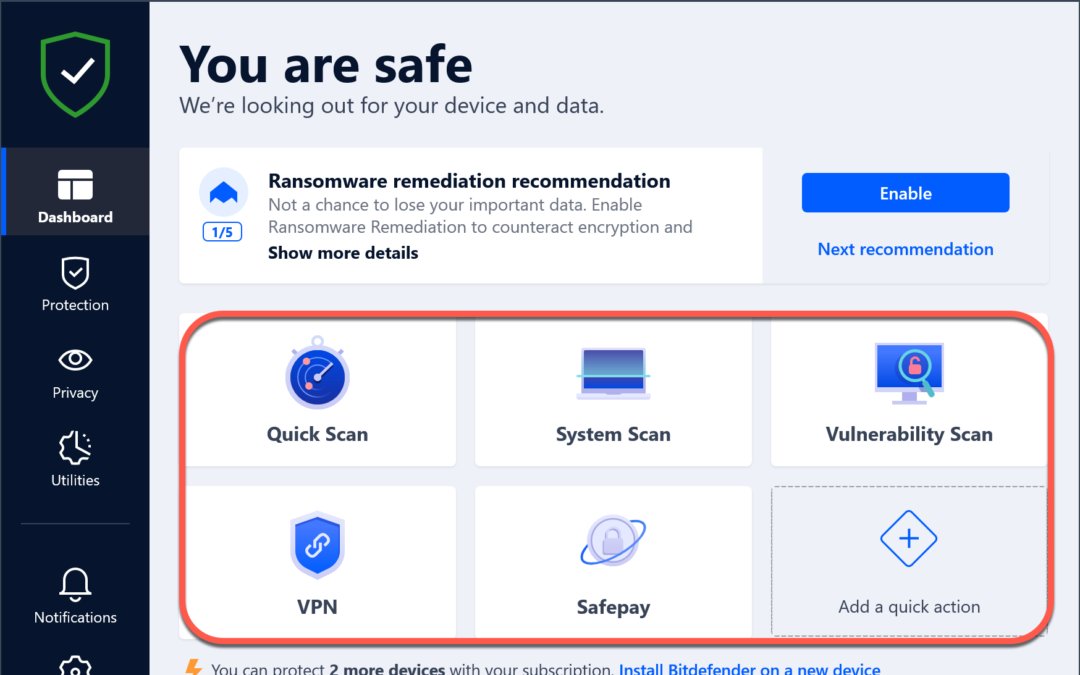
Bitdefender offers a range of features designed to provide comprehensive digital protection. The following outlines the main functionalities, described in a neutral and factual manner:
1. Real-Time Threat Detection
Bitdefender continuously monitors the system for viruses, malware, ransomware, spyware, and other potentially malicious programs. It analyzes files as they are downloaded or executed to detect threats proactively.
2. Multi-Layer Ransomware Protection
This feature focuses on safeguarding critical files against encryption by ransomware. Bitdefender monitors file behavior and restricts unauthorized modifications to sensitive directories.
3. Web Protection and Anti-Phishing
Bitdefender evaluates websites and online activity to detect phishing attempts, fraudulent sites, and malicious links. It works across browsers to prevent credential theft or unauthorized data collection.
4. Firewall and Network Security
Bitdefender includes firewall features that regulate incoming and outgoing traffic on connected devices. It can help prevent unauthorized network access and detect unusual traffic patterns.
5. Advanced Threat Intelligence
The platform leverages cloud-based intelligence to identify new malware patterns, suspicious domains, and emerging cyber threats. This helps maintain up-to-date protection against evolving attacks.
6. Privacy and Vulnerability Management
Some Bitdefender products provide tools for scanning system vulnerabilities, outdated software, and unsecured settings. Privacy features may include webcam protection, anti-tracking measures, and secure browsing indicators.
7. Device Optimization and Performance Monitoring
Certain editions of Bitdefender include tools to reduce system resource usage, optimize performance, and limit interference with other applications.
Common Use Cases
Bitdefender is designed to support various user types and scenarios:
Individual Consumers
- Protecting personal computers, smartphones, and tablets from malware and phishing attacks
- Securing online banking and e-commerce activities
- Preventing ransomware attacks on personal files
Small and Medium-Sized Businesses
- Protecting endpoint devices across a network
- Monitoring threats targeting internal servers or cloud systems
- Managing user permissions and access controls
Enterprise and Large Organizations
- Implementing centralized threat management
- Integrating security protocols across multiple devices and locations
- Monitoring network traffic for anomalies and potential breaches
Bitdefender can be used in home offices, educational institutions, healthcare systems, and corporate environments where digital safety is a priority.
Potential Advantages
The following are potential advantages of using Bitdefender, based on general features and reported usage patterns:
- Comprehensive protection layers including antivirus, anti-phishing, ransomware protection, and vulnerability scanning
- Cross-platform compatibility supporting Windows, macOS, Android, and iOS devices
- Cloud-assisted threat detection for faster recognition of new malware patterns
- Real-time monitoring that continuously evaluates system activity
- Customizable security settings allowing users to prioritize features according to their needs
These potential advantages reflect functionality but do not guarantee specific outcomes or protection levels. Effectiveness may vary depending on system configuration, user behavior, and emerging threats.
Limitations & Considerations
While Bitdefender offers extensive security features, there are several considerations and limitations to note:
- System Performance Impact: Some users may notice higher CPU or memory usage during scans or updates, particularly on older devices.
- Complexity for Beginners: Advanced features and settings may require familiarity with cybersecurity terminology and practices.
- Subscription Model: Business and premium editions operate on subscription plans, which may not be suitable for users seeking one-time software solutions.
- Support Variability: Customer support experiences can vary depending on region and product edition; some advanced configurations may require technical assistance.
- False Positives: Occasionally, legitimate software or files may be flagged as suspicious, requiring manual review.
- Limited Free Options: While Bitdefender offers free editions, certain protection layers are only available in paid tiers.
Who Should Consider Bitdefender
- Individuals concerned about digital security for home devices and online activities
- Businesses needing centralized endpoint protection for employees and servers
- Organizations seeking multi-layer threat defense including ransomware and phishing mitigation
- Users with intermediate to advanced technical skills who can configure security settings and interpret alerts
Who May Want to Avoid It
- Users with minimal technical experience who may find advanced settings overwhelming
- Individuals with older or low-performance devices sensitive to system resource consumption
- Users seeking fully free, no-subscription solutions for basic antivirus needs
- Those requiring highly specialized security features not covered by general consumer or small-business editions
Comparison With Similar Bitdefender
Bitdefender exists in a crowded cybersecurity ecosystem. Some comparable tools include:
- Norton: Offers similar endpoint protection and multi-layer defense. May have a more extensive support network but can also consume significant system resources.
- Kaspersky: Known for strong antivirus performance and threat intelligence. Licensing and feature sets differ depending on consumer or business editions.
- McAfee: Focuses on cross-platform protection and identity monitoring, with a heavier emphasis on integrated device management.
- Avast/AVG: Provides free and paid options with real-time protection and malware scanning. May have fewer enterprise features compared to Bitdefender.
Each tool has unique advantages and limitations, and selection depends on factors such as device type, organizational requirements, technical proficiency, and cost considerations.
Final Educational Summary
Bitdefender serves as a comprehensive cybersecurity solution with multiple protection layers aimed at both individual and organizational users. Its features include real-time threat detection, ransomware protection, web security, firewall management, and device optimization. While it offers potential advantages in monitoring and threat mitigation, considerations such as system performance, subscription models, and user expertise should be evaluated before adoption.
Users seeking to protect devices and networks should analyze their specific requirements, compare available tools, and monitor emerging cyber threats to determine which solution aligns with their objectives. Independent research and evaluation remain essential, as no single tool can fully eliminate the risk of cyber incidents.
Disclosure: This article is for educational and informational purposes only. Some links on this website may be affiliate links, but this does not influence our editorial content or evaluations.