
Introduction
The growth of online commerce has led to increased interest in tools that simplify store creation, product sourcing, and order management. Many individuals and small businesses look for ways to reduce manual work involved in running an online store, particularly in models such as drop shipping, where inventory is handled by third-party suppliers.
To address these needs, a range of software tools has emerged that aim to automate or streamline parts of the e-commerce workflow. These tools typically integrate product discovery, website setup, and order processing into a single platform.
This article provides an educational overview of one such tool.
What Is DropGenius?
DropGenius is an online software platform designed to assist users in creating and managing e-commerce stores, particularly those using the dropshipping model.
It falls into the category of e-commerce automation and store-building tools. Platforms in this category often aim to reduce the technical and operational complexity of launching an online store.
Such tools are typically used by:
- Individuals starting online businesses
- Small business owners exploring e-commerce
- Users with limited technical experience
- Dropshipping practitioners looking to streamline workflows
Key Features Explained (Not Promoted)
1. Store Creation Tools
DropGenius provides functionality to generate an online store structure. This may include templates, layouts, and pre-configured pages.
2. Product Sourcing Integration
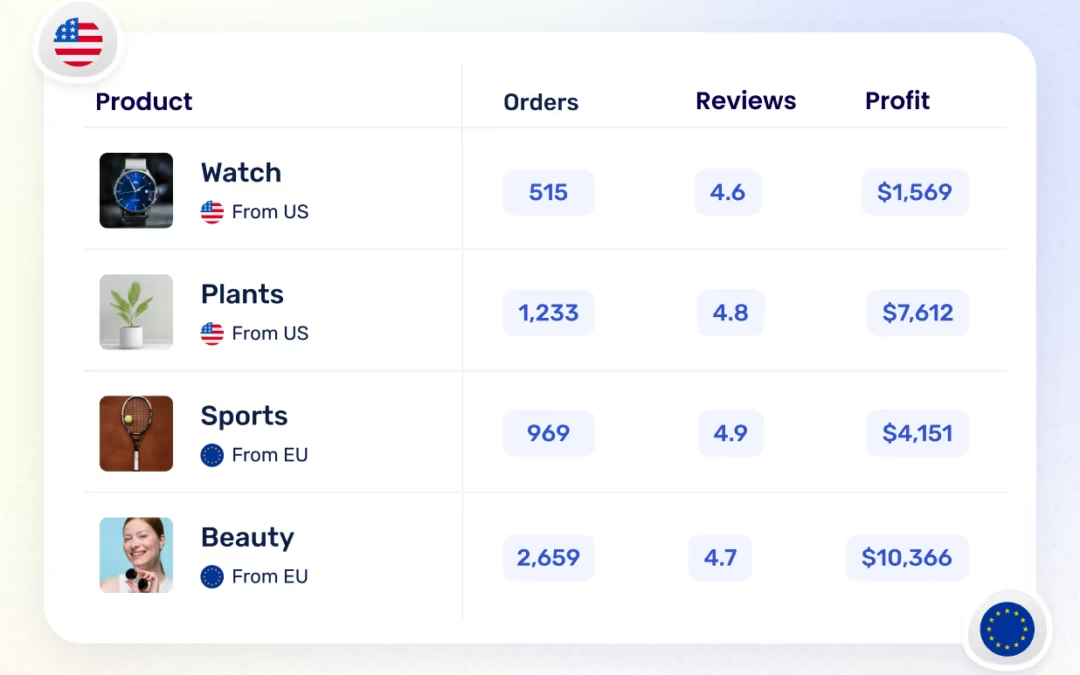
The platform appears to include access to product catalogs or integrations with suppliers. This allows users to import products into their store without managing physical inventory.
3. Automation Functions
Automation features may include order processing, product imports, and inventory updates. These are intended to reduce manual intervention in daily operations.
4. AI-Assisted Setup (if applicable)
Some tools in this category incorporate AI to assist with product descriptions, store design, or niche selection. These features typically aim to speed up setup rather than replace decision-making.
5. Dashboard and Management Interface
Users generally interact with a centralized dashboard to monitor orders, manage products, and adjust store settings.
Common Use Cases
Beginner Store Setup
Individuals with limited technical background may use such tools to create a basic online store without coding.
Dropshipping Operations
Users running dropshipping businesses may rely on automation for product imports and order fulfillment workflows.
Experimenting With Niches
Some users test different product categories or niches using quick store generation features.
Side Projects or Small Businesses
Freelancers or part-time sellers may use these tools to manage small-scale e-commerce operations.
Potential Advantages
- Reduced Setup Complexity: Tools like DropGenius can simplify the initial steps of building an online store.
- Time Efficiency: Automation may reduce repetitive tasks such as manual product uploads.
- Accessibility: Non-technical users may find it easier to start compared to building a store from scratch.
- Integrated Workflow: Combining multiple functions into one platform can reduce the need for multiple tools.
Limitations & Considerations
- Limited Customization: Pre-built templates may restrict design flexibility compared to fully custom solutions.
- Dependency on Platform: Users rely on the tool’s infrastructure, which may limit control over certain aspects.
- Learning Curve: While simplified, users still need to understand e-commerce fundamentals.
- Supplier Reliability: Dropshipping tools depend heavily on third-party suppliers, which introduces variability in product quality and shipping times.
- Scalability Concerns: Some platforms may not support advanced needs as businesses grow.
- Transparency of Automation: Automated processes may not always provide full visibility into how operations are handled.
Who Should Consider This Tool
- Beginners exploring e-commerce for the first time
- Users interested in dropshipping without managing inventory
- Individuals looking for a simplified store setup process
- Small-scale sellers testing ideas with minimal technical setup
Who May Want to Avoid It
- Experienced developers seeking full control over store architecture
- Businesses requiring highly customized storefronts
- Users prioritizing direct supplier relationships and logistics control
- Large-scale operations needing advanced integrations or scalability
Comparison With Similar Tools
DropGenius operates in a space alongside other e-commerce and dropshipping platforms such as:
- Shopify – A widely used e-commerce platform with extensive customization and app integrations
- WooCommerce – A WordPress-based solution offering flexibility but requiring more technical setup
- AutoDS – Focused on dropshipping automation and product sourcing
- Spocket – Emphasizes supplier networks, particularly in specific regions
Compared to these, DropGenius appears to focus more on automation and simplified onboarding, though feature depth and flexibility may vary.
Final Educational Summary
DropGenius is part of a broader category of tools designed to simplify the process of launching and managing an online store, particularly within the dropshipping model. It combines store creation, product sourcing, and automation into a single interface, which may be useful for beginners or small-scale users.
However, like many tools in this space, it involves trade-offs related to customization, control, and long-term scalability. Users should carefully evaluate their technical needs, business goals, and preferred level of involvement before relying on such platforms.
This article is for informational purposes only. Readers should evaluate tools based on their own requirements.