
Introduction
The rapid expansion of digital information has created a practical challenge for organizations, researchers, and analysts: collecting structured data from websites efficiently. Online information is often distributed across multiple pages, platforms, and formats, making manual extraction time-consuming and difficult to scale. As a result, a category of tools known as web scraping and data extraction platforms has developed to automate the process of gathering information from publicly accessible web pages.
Within this broader landscape, automation platforms aim to reduce the technical barriers traditionally associated with web scraping. Historically, extracting web data required programming skills, server management, and continuous maintenance when website layouts changed. Modern automation systems attempt to simplify these tasks through visual interfaces and prebuilt workflows.
One example in this category is Browse AI, a platform designed to monitor and extract information from websites through automated processes. Tools like Browse AI are commonly used for tasks such as price monitoring, content aggregation, research data collection, and business intelligence gathering.
Understanding how such tools function—and where they fit within the broader data automation ecosystem—can help organizations evaluate whether this category of technology aligns with their operational needs.
What Is Browse AI?
Browse AI is a web automation and data extraction platform that enables users to collect information from websites without writing code. It belongs to the category of no-code web scraping tools, which aim to simplify the process of turning unstructured web content into structured datasets.
Rather than relying on manual programming scripts, Browse AI typically operates through automated “robots.” These robots are configured to interact with a web page, identify specific elements such as product names or prices, and extract those data points. Once configured, the robot can repeat the process at scheduled intervals.
The platform is generally associated with several overlapping technology categories, including:
- Web scraping software
- Data extraction tools
- Web automation platforms
- Competitive intelligence monitoring tools
- Market research data collection systems
Browse AI is often discussed alongside other no-code automation tools that enable non-technical users to build workflows for interacting with websites. In many cases, the software captures structured information such as tables, listings, or repeating elements from web pages.
The underlying concept is not new—web scraping has existed for decades—but platforms like Browse AI aim to make the process more accessible through visual configuration instead of traditional coding methods.
Key Features Explained
Visual Data Extraction Setup
One of the defining characteristics of Browse AI is its visual configuration approach. Users typically select elements on a web page—such as product titles or prices—and the system learns the pattern needed to extract similar elements across the page.
This approach reduces the need for programming languages commonly associated with scraping frameworks, such as Python or JavaScript. Instead, users interact with the interface to define what information should be captured.
Automated Web Monitoring
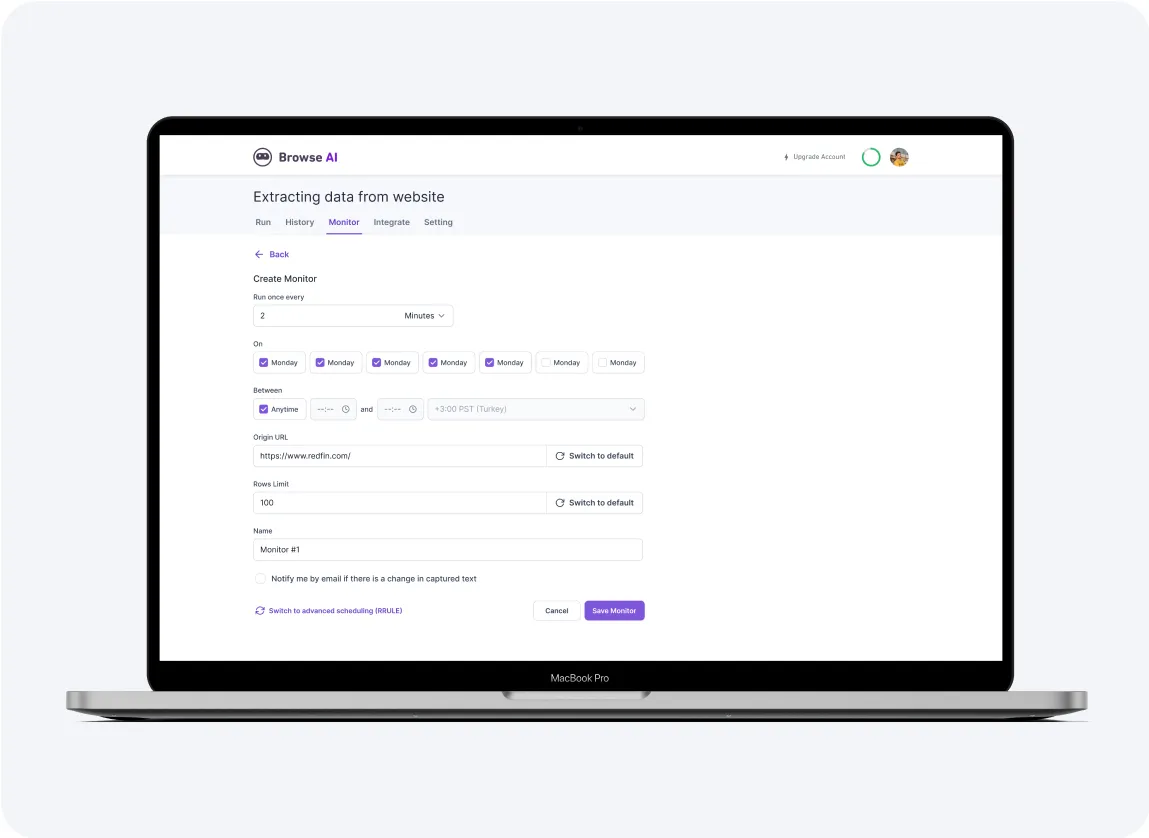
Browse AI can be configured to check specific pages at scheduled intervals. When the monitored content changes, the system can capture updated data points.
Monitoring capabilities are commonly used in areas such as:
- price tracking
- product availability monitoring
- content updates
- competitor information tracking
The concept is similar to automated website monitoring tools but focuses specifically on extracting structured data rather than simply detecting changes.
Structured Data Output
Web pages typically display information in a format designed for human reading rather than machine analysis. Browse AI attempts to convert selected information into structured formats that can be exported or integrated with other data systems.
Common data structures may include:
- tabular datasets
- product listings
- directory entries
- article metadata
Structured data enables further analysis through spreadsheets, analytics tools, or data pipelines.
No-Code Workflow Design
Another aspect of Browse AI is its attempt to remove technical complexity. The platform generally provides templates and visual automation flows that allow users to create extraction processes without coding knowledge.
In the broader market, this aligns with the growing adoption of no-code automation platforms, which aim to allow non-developers to build functional workflows.
Scheduled Data Collection
Automated schedules allow robots to revisit selected web pages periodically. This enables ongoing monitoring rather than one-time data extraction.
Scheduled scraping can support activities such as:
- tracking market prices
- monitoring job listings
- observing changes in product catalogs
- collecting periodic research data
The ability to automate repeated data collection reduces the need for manual review.
Common Use Cases
Market and Competitor Analysis
Businesses frequently monitor competitor websites to track pricing, product listings, and promotional changes. Browse AI may be used to collect structured information from these pages and store it for later analysis.
This type of data collection can support market intelligence efforts by providing historical records of competitor activity.
E-Commerce Price Monitoring
Retailers often track product prices across multiple online stores. Automated extraction tools help gather pricing data from competitor websites without manually reviewing each page.
Price monitoring datasets can assist in identifying pricing trends or detecting fluctuations in online marketplaces.
Research and Data Collection
Academic researchers and analysts sometimes rely on publicly available online information for datasets. Manually gathering this data can be time-intensive, particularly when large numbers of pages must be reviewed.
Web extraction platforms like Browse AI can help automate portions of this process by capturing structured data from recurring page layouts.
Lead and Directory Data Collection
Some organizations compile lists of businesses, job listings, or public directories for research or outreach purposes. Automated extraction tools can gather structured entries from directories containing repeating data fields.
However, this use case often requires careful consideration of website policies and data usage regulations.
Content Monitoring
News websites, blogs, and online publications frequently update their content. Automated monitoring tools can detect new posts, article changes, or headline updates.
This capability is sometimes used in media analysis or content tracking systems.
Potential Advantages
Reduced Technical Complexity
Traditional web scraping often requires coding knowledge and maintenance of scripts. Platforms like Browse AI attempt to simplify this process through visual configuration.
This approach may allow individuals without programming experience to automate data collection tasks.
Time Efficiency
Manual data collection from websites can require significant time, particularly when multiple pages or platforms are involved. Automated extraction can reduce repetitive work by gathering information automatically.
Scalability of Data Collection
Automation tools can collect data from multiple pages or websites at a larger scale than manual methods. This may be useful in situations where datasets require frequent updates.
Consistent Data Retrieval
When properly configured, automated extraction processes may reduce inconsistencies that occur with manual data entry.
Standardized extraction patterns can help maintain uniform data formatting across datasets.
Limitations & Considerations
Website Structure Changes
One of the most common challenges with web scraping tools is that websites frequently change their layout. When this occurs, automated extraction rules may stop working correctly and require adjustment.
This maintenance requirement is common across nearly all scraping platforms.
Legal and Policy Compliance
Different websites maintain their own policies regarding automated data collection. Organizations using scraping tools must consider the terms of service and applicable regulations governing data access.
Compliance considerations may vary depending on jurisdiction and data type.
Data Quality Challenges
Web pages sometimes contain inconsistent or unstructured content, which may lead to incomplete or inaccurate extraction results.
Manual verification is often necessary to ensure dataset reliability.
Technical Boundaries
While no-code tools reduce complexity, they may also introduce limitations compared with fully customizable scraping frameworks.
Complex interactions such as authentication systems, dynamic content loading, or anti-bot measures can create challenges for automated extraction tools.
Resource Requirements
Large-scale monitoring or data extraction may require computational resources and storage management, particularly when collecting datasets across many pages.
Who Should Consider Browse AI
Browse AI and similar web automation tools may be relevant for several categories of users.
Market Analysts
Professionals conducting market research may need structured information from competitor websites or product listings.
Automated extraction tools can assist with recurring data collection tasks.
Researchers and Data Analysts
Individuals gathering publicly available web data for academic or analytical purposes may find value in automation platforms that simplify dataset creation.
Small Business Operators
Organizations without dedicated technical teams may explore no-code scraping tools when they need structured information from online sources.
Digital Monitoring Teams
Groups responsible for tracking industry trends, pricing changes, or product updates may use web monitoring tools to automate portions of the process.
Who May Want to Avoid It
Despite potential use cases, Browse AI may not be appropriate for every scenario.
Organizations Requiring Custom Data Pipelines
Businesses that require highly customized scraping logic or integration with complex data infrastructures may prefer traditional programming frameworks.
Highly Technical Web Environments
Some websites rely heavily on dynamic loading, authentication systems, or anti-automation protections that can complicate automated extraction.
Users With Strict Compliance Requirements
Industries that operate under strict data governance regulations may require specialized data collection methods with more granular compliance controls.
One-Time Data Collection Tasks
If data extraction is required only once or infrequently, manual methods may sometimes be simpler than configuring an automated workflow.
Comparison With Similar Tools
Browse AI exists within a competitive ecosystem of web scraping and automation platforms. Several tools aim to solve similar problems, although they vary in technical complexity and target users.
No-Code Scraping Platforms
Some tools emphasize visual interfaces that allow non-developers to create scraping workflows. These systems often provide templates for common data extraction tasks such as e-commerce listings or directory pages.
Browse AI is commonly categorized within this group due to its visual robot configuration approach.
Developer-Focused Scraping Frameworks
Other tools are designed primarily for software developers and data engineers. These frameworks typically require coding but allow greater customization and control.
Examples include open-source scraping libraries and programmable data pipelines.
Data Aggregation Platforms
Certain platforms combine scraping with data aggregation services, offering pre-collected datasets rather than extraction tools.
Browse AI differs in that it focuses primarily on enabling users to collect their own data directly from web pages.
Automation Workflow Tools
Some automation platforms integrate web interactions into broader workflow systems that include notifications, integrations, and data transfers between services.
Browse AI may intersect with this category when automated monitoring triggers downstream data processing.
Final Educational Summary
Browse AI represents a modern approach to no-code web scraping and data extraction automation. By enabling users to configure automated robots that interact with web pages, the platform attempts to simplify the process of collecting structured data from online sources.
The tool sits within a broader ecosystem of web automation technologies that aim to address the growing need for scalable data collection. Applications range from market research and price monitoring to academic data gathering and digital content tracking.
However, automated web extraction tools also present challenges. Changes in website structures, compliance considerations, and technical limitations can affect the reliability and sustainability of automated workflows. As with many automation platforms, the usefulness of such tools depends heavily on the specific context in which they are applied.
Understanding both the capabilities and the constraints of platforms like Browse AI can help organizations determine whether no-code data extraction tools align with their operational needs and technical environment.
Disclosure
This article is for educational and informational purposes only. Some links on this website may be affiliate links, but this does not influence our editorial content or evaluations.
